
Luxury Vinyl Plank flooring has become incredibly popular in Worthington Hills homes thanks to its durability and stylish appearance. But when a pipe bursts or heavy rain floods your basement, many homeowners discover a harsh truth: ‘waterproof’ doesn’t always mean ‘floodproof.’ The real question isn’t whether your LVP planks can handle a spilled drink, but whether they can survive standing water that seeps underneath and into your subfloor. Professional water damage restoration for Short North shops and galleries.
Here’s what you need to know immediately: if water sits on your LVP flooring for more than 24-48 hours, the damage extends far beyond the surface. Moisture gets trapped beneath the planks, creating perfect conditions for mold growth in your subfloor. The locking mechanisms that make LVP so appealing can actually trap water underneath, leading to swelling, warping, and structural damage that’s often invisible until it’s too late.
Worthington Hills homes face unique challenges. Many were built on clay-heavy soil that expands and contracts with moisture changes, putting additional stress on basement foundations. Combined with Ohio’s freeze-thaw cycles and the area’s aging infrastructure, your LVP flooring sits at the intersection of several risk factors that can turn a small leak into a major restoration project.
Understanding LVP and Water: Why ‘Waterproof’ Doesn’t Mean ‘Floodproof’
The term ‘waterproof’ for LVP flooring is misleading because it refers to the surface material, not the entire system. While the vinyl planks themselves resist water damage, the real vulnerability lies in what’s underneath: your subfloor, underlayment, and the seams between planks.. Read more about Choosing between a pedestal and a submersible sump pump for your Columbus basement.
Most LVP flooring in Worthington Hills homes uses either SPC (Stone Plastic Composite) or WPC (Wood Plastic Composite) cores. SPC is denser and more rigid, while WPC has a softer, more comfortable feel. Both types have microscopic gaps at the click-lock edges where water can penetrate during a flood. Once water breaches these seals, it flows freely across your subfloor.
The trapped water phenomenon is particularly problematic. Unlike traditional hardwood that can breathe and release moisture, LVP creates a vapor barrier that traps water underneath. This creates a perfect breeding ground for mold within 24-48 hours, even if the surface appears dry. By the time you notice musty odors or see discoloration on your baseboards, the damage has already spread to your subfloor and wall cavities.
Worthington Hills’ climate compounds these risks. Summer humidity levels often exceed 70%, slowing natural drying processes. When combined with the clay soil common in Franklin County that holds moisture against foundation walls, even a small flood can create conditions that persist for weeks without professional intervention.
Step-by-Step Recovery: What to Do When Your LVP Gets Flooded
Time is your enemy when LVP flooring floods. Here’s the exact process that determines whether your floors can be saved:
- Stop the Water Source
Turn off the main water valve if it’s a plumbing issue, or block entry points if it’s storm water. Every minute of continued flooding increases damage exponentially. Fixing storm and flood damage in Hilliard after heavy rains.
- Extract Standing Water
Use wet vacuums for surface water, but understand this only removes what you can see. Water has already begun seeping under the planks.
- Assess the Extent
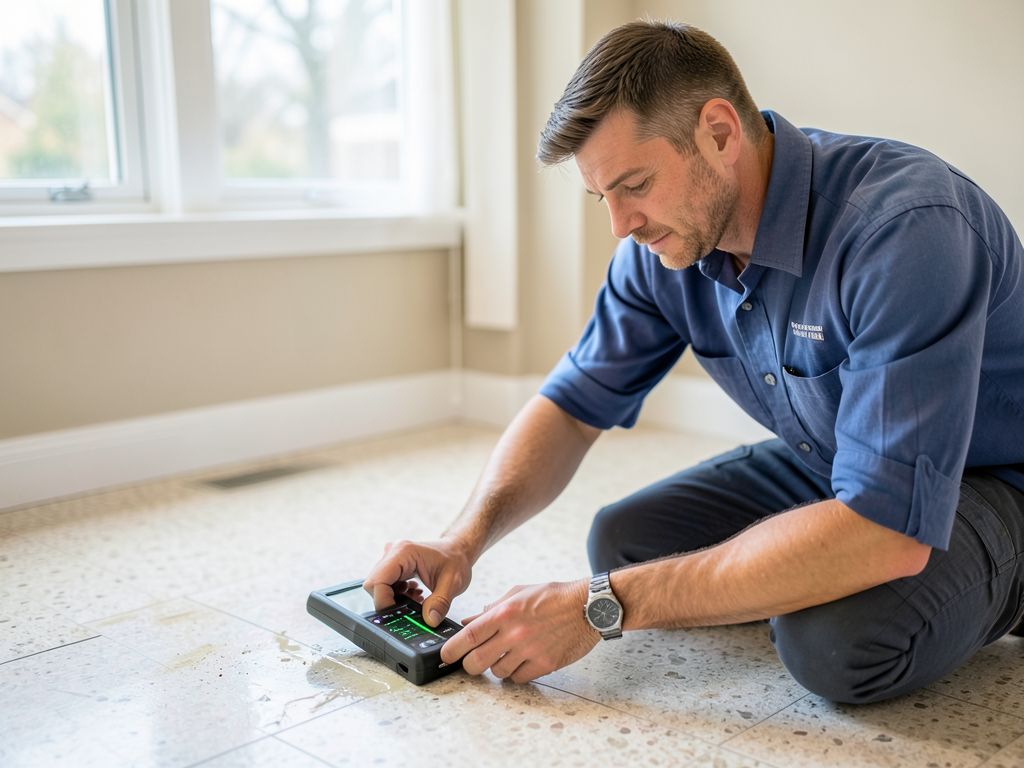
Check baseboards and wall bottoms for water wicking. Use a moisture meter at the edges of the room to detect subfloor saturation levels. Readings above 16% indicate active moisture problems.
- Remove Affected Planks
Start removing planks along the water’s edge. If the subfloor beneath is damp or shows water staining, the damage has spread beyond what’s visible.
- Begin Professional Drying
Industrial air movers and dehumidifiers need to run for 3-5 days minimum. Consumer fans won’t generate the airflow needed to dry subfloors effectively.
The critical window is the first 48 hours. After this point, mold spores begin colonizing the damp environment beneath your LVP. The Ohio Department of Health recommends professional assessment for any water damage exceeding 10 square feet, but with LVP’s hidden moisture retention, even smaller areas warrant expert evaluation. EPA mold guidelines.
Many Worthington Hills homeowners make the mistake of thinking their floors are fine once the surface appears dry. However, moisture meters often reveal 15-20% moisture content in subfloors that feel completely dry to the touch. This hidden moisture continues damaging your home’s structure and creating health hazards long after the flood appears resolved.
The ‘Save vs. Replace’ Checklist: How to Know If Your LVP Can Be Restored
Not all flooded LVP flooring situations are the same. Here’s how to determine if your investment can be saved or if replacement is necessary:
| Factor | Can Be Saved | Must Replace |
|---|---|---|
| Water Category | Clean water (supply line) | Gray or black water (sewage, floodwater) |
| Exposure Time | < 24 hours | > 48 hours |
| Subfloor Type | Concrete slab (dries faster) | Plywood over crawl space (holds moisture) |
| Mold Presence | No visible mold | Any mold growth detected |
| Plank Condition | No warping or delamination | Visible swelling or separation |
Clean water from a burst pipe has the best chance of allowing floor salvage, but even this requires proper drying techniques. The IICRC S500 Standard for water damage restoration specifies that materials exposed to clean water for over 48 hours should be treated as contaminated due to potential microbial growth. IICRC S500 Standard.
Gray water from washing machines or dishwashers contains detergents and organic matter that accelerate bacterial growth. Black water from sewage backups or river flooding introduces pathogens that make any salvage attempt dangerous. In these cases, removal and replacement is the only safe option.
The type of subfloor dramatically affects drying success. Concrete slabs in Worthington Hills basements can often be dried in place using specialized drying mats that force air through the slab. However, plywood subfloors over crawl spaces act like sponges, holding moisture for weeks and requiring complete removal in most cases.
Professional Drying vs. DIY: Why Your Box Fan Won’t Cut It
The equipment difference between professional and DIY water damage restoration is staggering. While you might run three box fans for a weekend, professionals deploy industrial-grade equipment that creates conditions impossible to replicate at home.. Read more about Saving your home gym equipment and rubber flooring after a basement flood in Scioto Woods.
Professional-grade LGR (Low Grain Refrigerant) dehumidifiers remove 20-25 gallons of water per day from the air, compared to 5-7 gallons for consumer models. These units maintain specific humidity levels that accelerate evaporation from building materials. Air movers create directional airflow at 3,000+ CFM that forces moisture out of materials rather than just circulating air.
Moisture meters used by professionals read moisture content through materials without damage. Pinless meters can scan entire rooms in minutes, while pin-type meters provide accurate readings at specific depths. These tools detect moisture that’s invisible to homeowners, often revealing problems that extend 12-18 inches beyond visible water damage.
Antimicrobial treatments applied during professional drying prevent mold growth during the critical 48-72 hour window. These EPA-registered products are safe for occupied spaces but create an environment where mold spores cannot establish colonies. DIY cleaning products lack the penetration and residual protection needed for effective mold prevention.
Worthington Hills’ specific conditions make professional drying even more critical. The area’s high summer humidity means natural drying is extremely slow. Professional dehumidification can reduce drying times from weeks to days, preventing secondary damage that occurs while homeowners wait for floors to dry naturally.
Insurance Navigation: Documenting LVP Damage for Columbus Claims
Insurance coverage for flooded LVP flooring depends on your policy specifics and how quickly you respond. Most homeowners policies cover sudden and accidental water discharge but exclude gradual leaks or flood damage (which requires separate flood insurance).
Documentation is crucial for successful claims. Take photos and videos immediately after discovering the damage, before any cleanup begins. Document the source of the water, the extent of visible damage, and any personal property affected. Keep all receipts for emergency services, even if you’re unsure about coverage. Frozen pipe cleanup and repair in Gahanna before the damage spreads.
Professional water damage restoration companies work directly with insurance adjusters, providing detailed documentation that supports your claim. This includes moisture mapping, drying logs, and itemized lists of removed materials. This professional documentation often results in higher claim approvals compared to homeowner-submitted estimates.
Many Worthington Hills homeowners discover their policies have specific exclusions for flooring materials. Some insurers consider LVP a luxury upgrade and only cover basic replacement costs, leaving homeowners responsible for the difference. Understanding these limitations before filing a claim helps manage expectations about coverage.
The claims process typically takes 30-60 days for straightforward cases but can extend to 90+ days for complex situations involving structural damage or disputes over coverage. Professional restoration companies can often begin emergency services immediately while insurance details are being resolved, preventing further damage during the claims process.
Prevention Strategies: Protecting Your Worthington Hills LVP Investment
While you can’t prevent every flood, several strategies can minimize your risk of LVP damage in Worthington Hills homes. Start with your home’s exterior: ensure gutters and downspouts direct water at least 6 feet away from foundation walls. Grade soil away from your home’s perimeter to prevent water pooling.
Install water detection devices near potential leak sources: under sinks, behind washing machines, and near water heaters. Modern smart detectors can send alerts to your phone when moisture is detected, giving you crucial extra minutes to respond before extensive damage occurs.
Consider upgrading your main water shutoff valve to a smart valve that automatically closes when unusual water flow is detected. These devices can prevent thousands of dollars in damage by stopping leaks within minutes rather than hours or days.
For finished basements, install a secondary sump pump with battery backup. Worthington Hills’ clay soil and proximity to the Olentangy River make basements particularly vulnerable to groundwater intrusion during heavy rains. A failed primary pump can lead to significant flooding in hours.
Regular maintenance of plumbing fixtures and appliances prevents many common causes of LVP flooding. Replace washing machine hoses every 5 years, inspect refrigerator water lines annually, and have your water heater serviced regularly. These simple steps cost far less than emergency restoration services.
Emergency 24/7 Water Extraction in Columbus
When your Worthington Hills home faces flooding, every minute counts. Professional water damage restoration requires specialized equipment, training, and experience that most homeowners don’t have during an emergency.
Five Star Water Damage Restoration Columbus provides rapid response throughout Worthington and surrounding areas. Our certified technicians arrive within 60 minutes with industrial-grade extraction equipment, moisture detection tools, and the expertise to prevent secondary damage. Rapid Response Flood Extraction.
We understand Worthington Hills’ unique challenges: the area’s clay soil, aging infrastructure, and specific building patterns that affect how water moves through homes. This local knowledge means faster, more effective restoration that protects your investment.
Don’t wait until mold appears or your subfloor begins to rot. Call (614) 707-7505 immediately when flooding occurs. Our 24/7 emergency line connects you directly with experienced technicians who can assess your situation and begin mitigation within the critical first hours.
Pick up the phone and call (614) 707-7505 before the next storm hits. The cost of immediate professional response is always less than the damage caused by waiting 24-48 hours to see if your floors will dry on their own.
Frequently Asked Questions
How long does LVP flooring take to dry after flooding?
Surface drying takes 24-48 hours, but subfloor moisture often requires 3-5 days with professional equipment. Without proper drying, moisture levels remain elevated for weeks, creating mold risks.
Can I just replace the damaged LVP planks?
Sometimes, but only if the subfloor is completely dry and mold-free. Trapped moisture under surrounding planks will continue causing damage even after plank replacement.
Will my homeowner’s insurance cover flooded LVP flooring?
Most policies cover sudden and accidental water discharge but exclude flood damage and gradual leaks. Coverage for flooring materials varies by policy specifics and may require documentation of pre-flood condition.
How can I tell if water got under my LVP flooring?
Look for water wicking up walls, check for musty odors, and use a moisture meter at floor edges. Professional thermal imaging can detect moisture beneath planks without removal.
Is it safe to stay in my home during LVP floor drying?
Yes, with proper equipment. Professional-grade dehumidifiers and air movers are designed for occupied spaces. However, sewage or floodwater contamination requires evacuation until proper sanitization is complete.
You may also find this helpful. Why autumn leaves might be the reason your basement floods in Woodland Park.
{
“@context”: “https://schema.org”,
“@type”: “BlogPosting”,
“headline”: “Can your LVP flooring actually survive a flood in your Worthington Hills home?”,
“description”: “LVP flooring isn’t always waterproof. Discover if your Worthington Hills home’s floors can survive a flood and what to do immediately to prevent mold growth.”,
“wordCount”: 2034,
“datePublished”: “2026-04-23T10:46:00.000Z”,
“dateModified”: “2026-04-23T10:46:00.000Z”,
“inLanguage”: “en-US”,
“mainEntityOfPage”: {
“@type”: “WebPage”,
“@id”: “https://fivestarwaterdamagerestorationcolumbus.com”
},
“publisher”: {
“@type”: “LocalBusiness”,
“name”: “Five Star Water Damage Restoration Columbus”,
“url”: “https://fivestarwaterdamagerestorationcolumbus.com”
},
“author”: {
“@type”: “Organization”,
“name”: “Five Star Water Damage Restoration Columbus”,
“url”: “https://fivestarwaterdamagerestorationcolumbus.com”
},
“image”: {
“@type”: “ImageObject”,
“url”: “https://fivestarwaterdamagerestorationcolumbus.com/wp-content/uploads/2026/03/can-your-lvp-flooring-actually-survive-a-flood-in-1.png”
}
}
{
“@context”: “https://schema.org”,
“@type”: “LocalBusiness”,
“name”: “Five Star Water Damage Restoration Columbus”,
“url”: “https://fivestarwaterdamagerestorationcolumbus.com”,
“address”: {
“@type”: “PostalAddress”,
“addressLocality”: “Columbus”
},
“areaServed”: {
“@type”: “City”,
“name”: “Columbus”
}
}
{
“@context”: “https://schema.org”,
“@type”: “FAQPage”,
“mainEntity”: [
{
“@type”: “Question”,
“name”: “How long does LVP flooring take to dry after flooding?”,
“acceptedAnswer”: {
“@type”: “Answer”,
“text”: “Surface drying takes 24-48 hours, but subfloor moisture often requires 3-5 days with professional equipment. Without proper drying, moisture levels remain elevated for weeks, creating mold risks.”
}
},
{
“@type”: “Question”,
“name”: “Can I just replace the damaged LVP planks?”,
“acceptedAnswer”: {
“@type”: “Answer”,
“text”: “Sometimes, but only if the subfloor is completely dry and mold-free. Trapped moisture under surrounding planks will continue causing damage even after plank replacement.”
}
},
{
“@type”: “Question”,
“name”: “Will my homeowner’s insurance cover flooded LVP flooring?”,
“acceptedAnswer”: {
“@type”: “Answer”,
“text”: “Most policies cover sudden and accidental water discharge but exclude flood damage and gradual leaks. Coverage for flooring materials varies by policy specifics and may require documentation of pre-flood condition.”
}
},
{
“@type”: “Question”,
“name”: “How can I tell if water got under my LVP flooring?”,
“acceptedAnswer”: {
“@type”: “Answer”,
“text”: “Look for water wicking up walls, check for musty odors, and use a moisture meter at floor edges. Professional thermal imaging can detect moisture beneath planks without removal.”
}
},
{
“@type”: “Question”,
“name”: “Is it safe to stay in my home during LVP floor drying?”,
“acceptedAnswer”: {
“@type”: “Answer”,
“text”: “Yes, with proper equipment. Professional-grade dehumidifiers and air movers are designed for occupied spaces. However, sewage or floodwater contamination requires evacuation until proper sanitization is complete.”
}
}
]
}
{
“@context”: “https://schema.org”,
“@type”: “HowTo”,
“name”: “Emergency LVP Flood Response”,
“step”: [
{
“@type”: “HowToStep”,
“position”: 1,
“name”: “Stop the Water Source”,
“text”: “Turn off the main water valve if it’s a plumbing issue, or block entry points if it’s storm water. Every minute of continued flooding increases damage exponentially. Fixing storm and flood damage in Hilliard after heavy rains.”
},
{
“@type”: “HowToStep”,
“position”: 2,
“name”: “Extract Standing Water”,
“text”: “Use wet vacuums for surface water, but understand this only removes what you can see. Water has already begun seeping under the planks.”
},
{
“@type”: “HowToStep”,
“position”: 3,
“name”: “Assess the Extent”,
“text”: “Check baseboards and wall bottoms for water wicking. Use a moisture meter at the edges of the room to detect subfloor saturation levels. Readings above 16% indicate active moisture problems.”
},
{
“@type”: “HowToStep”,
“position”: 4,
“name”: “Remove Affected Planks”,
“text”: “Start removing planks along the water’s edge. If the subfloor beneath is damp or shows water staining, the damage has spread beyond what’s visible.”
},
{
“@type”: “HowToStep”,
“position”: 5,
“name”: “Begin Professional Drying”,
“text”: “Industrial air movers and dehumidifiers need to run for 3-5 days minimum. Consumer fans won’t generate the airflow needed to dry subfloors effectively.”
}
],
“image”: “https://fivestarwaterdamagerestorationcolumbus.com/wp-content/uploads/2026/03/can-your-lvp-flooring-actually-survive-a-flood-in-1.png”
}
{
“@context”: “https://schema.org”,
“@type”: “BreadcrumbList”,
“itemListElement”: [
{
“@type”: “ListItem”,
“position”: 1,
“name”: “Home”,
“item”: “https://fivestarwaterdamagerestorationcolumbus.com”
},
{
“@type”: “ListItem”,
“position”: 2,
“name”: “Blog”,
“item”: “https://fivestarwaterdamagerestorationcolumbus.com/blog”
},
{
“@type”: “ListItem”,
“position”: 3,
“name”: “Can your LVP flooring actually survive a flood in your Worthington Hills home?”
}
]
}
{
“@context”: “https://schema.org”,
“@type”: “Service”,
“serviceType”: “Water Damage Restoration”,
“provider”: {
“@type”: “LocalBusiness”,
“name”: “Five Star Water Damage Restoration Columbus”,
“url”: “https://fivestarwaterdamagerestorationcolumbus.com”
},
“areaServed”: {
“@type”: “City”,
“name”: “Columbus”
},
“description”: “LVP flooring isn’t always waterproof. Discover if your Worthington Hills home’s floors can survive a flood and what to do immediately to prevent mold growth.”
}