
How thermal imaging helps us find hidden water leaks in your Columbus home
When water seeps into your walls, floors, or ceilings, the damage often remains invisible until it’s too late. That’s why we use FLIR thermal imaging technology to detect hidden moisture before it causes mold growth or structural decay. Our certified technicians scan your property with infrared cameras that reveal temperature differences caused by evaporative cooling from water intrusion. Professional water damage restoration for Short North shops and galleries.
Columbus homes face unique challenges from Ohio’s freeze-thaw cycles that can crack pipes and create hidden leaks behind plaster walls. A small pinhole leak behind your bathroom wall might cost you thousands in repairs if it goes undetected for months. Our thermal imaging process identifies these problems without tearing apart your drywall or flooring. EPA mold information.
Infrared thermography works by detecting infrared radiation emitted by objects. Water-damaged materials show up as cooler areas on the thermal scan because evaporation cools the surface. This allows us to map moisture patterns across entire rooms in minutes rather than hours of destructive testing.. Read more about Why moisture problems in Weinland Park homes often lead to carpenter ant infestations.
How infrared thermography detects hidden water damage
Thermal cameras don’t actually see water – they detect temperature variations. When water evaporates from building materials, it creates a cooling effect that appears as dark blue or purple on our infrared displays. This evaporative cooling can be as much as 15-20 degrees cooler than surrounding dry areas.
Our process starts with a baseline scan of your property to establish normal temperature patterns. Then we look for thermal anomalies – areas where the temperature deviates significantly from the surrounding materials. These anomalies often indicate moisture intrusion, missing insulation, or electrical hotspots that could pose fire risks.
The technology works through several inches of common building materials. A Class 1 water leak behind 5/8-inch drywall typically shows up clearly on our FLIR cameras. We can also detect moisture in hardwood flooring, tile, and even some masonry products when conditions are right. What to do right now if your Dublin basement just flooded.
Benefits of thermal imaging vs. traditional methods
Traditional leak detection often means cutting holes in walls or removing flooring to find the source. Our non-invasive approach eliminates this destruction while providing more comprehensive coverage. A single thermal scan can cover 1,000 square feet in about 15 minutes.
Insurance companies increasingly accept thermal imaging reports as documentation for claims. The visual evidence helps adjusters understand the extent of damage without requiring multiple site visits. This speeds up claim processing and reduces disputes over coverage.
Beyond water detection, our thermal cameras identify electrical hotspots that could indicate overloaded circuits or failing components. This dual-purpose capability adds value by catching potential fire hazards during the same inspection.
The accuracy of thermal imaging depends on several factors including ambient temperature, humidity levels, and the materials involved. Our technicians are trained to account for these variables and interpret results correctly. We also use moisture meters to verify findings when needed.
Our Columbus service area & response time
We serve all of Franklin County including zip codes 43215, 43220, 43221, 43229, and 43235. Our average response time is 45 minutes for emergency calls within the I-270 belt. For non-emergency inspections, we typically schedule within 24-48 hours. Rapid Response Flood Extraction.
Columbus’s aging infrastructure in neighborhoods like German Village and the Short North creates unique challenges. Many homes built before 1970 have galvanized pipes that corrode from the inside out. These hidden failures often manifest as slow leaks that thermal imaging can detect before major damage occurs.
The heavy clay soil common in central Ohio puts pressure on foundation walls. This hydrostatic pressure can cause hairline cracks that allow groundwater intrusion. Our thermal scans can identify these moisture entry points even when they’re not visible to the naked eye.
Commercial properties near the Ohio State University campus face different challenges. High-rise buildings with complex plumbing systems require specialized scanning techniques. We’ve successfully located leaks in multi-story dormitories and office buildings using our advanced thermal imaging equipment.
Frequently Asked Questions
How much does thermal imaging leak detection cost in Columbus?
Prices typically range from $250 to $600 depending on the size of the area being scanned. Most residential inspections fall between $350 and $450. This is significantly less expensive than the cost of unnecessary demolition or waiting until visible damage appears.
Can thermal imaging see through walls?
No, thermal cameras detect surface temperature variations, not X-ray vision. The technology works by measuring infrared radiation emitted from the surface of materials. Water changes how materials emit this radiation, creating the temperature differences we detect.
How accurate is thermal imaging for finding leaks?
When performed by certified technicians, thermal imaging accuracy exceeds 90% for active leaks. Accuracy drops for very slow leaks or when the area has already dried. We always confirm findings with moisture meters for verification.
Will my insurance cover thermal imaging services?
Many policies cover diagnostic services when there’s evidence of water damage. The thermal imaging report often helps justify the scope of repairs needed. We provide detailed documentation that insurance companies accept for claims processing.
How long does a thermal inspection take?
A typical residential inspection takes 1-2 hours depending on the size of your home. We scan all suspect areas plus a representative sample of other rooms to establish baseline conditions. You’ll receive a written report with thermal images and our findings.
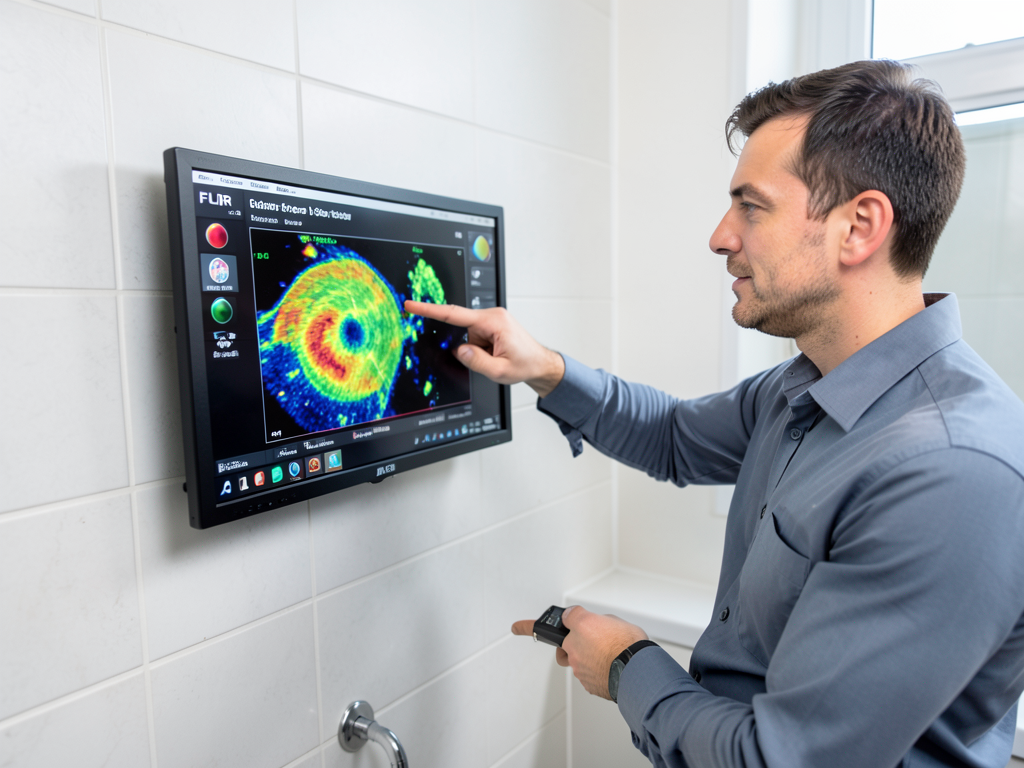
A FLIR thermal camera in use scanning a bathroom wall, with the technician pointing to a thermal anomaly on the display screen that indicates hidden moisture behind the tile.
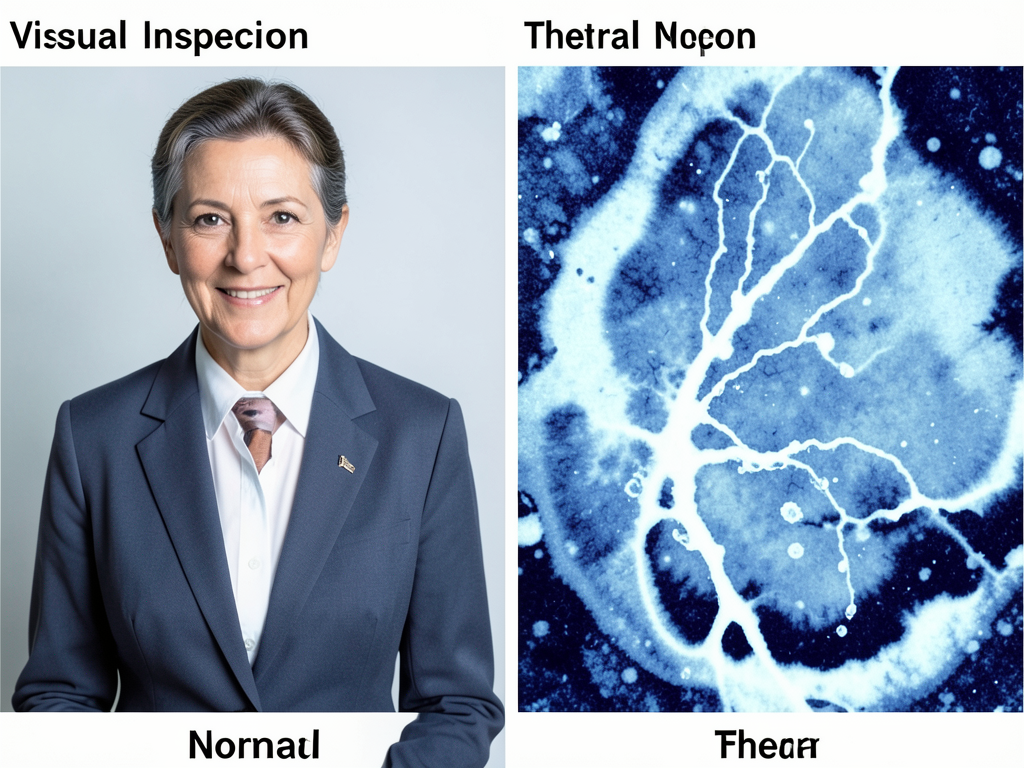
Side-by-side comparison showing a normal visual inspection of a ceiling versus the thermal imaging view revealing a water intrusion pattern from an active roof leak.
Technician using a moisture meter to verify thermal imaging findings on a hardwood floor, demonstrating the combination of technologies for accurate leak detection.
Why non-invasive leak detection matters for Columbus homeowners
Ohio’s climate creates conditions that make hidden leaks particularly problematic. Winter temperatures frequently drop below freezing, causing pipes to expand and contract. This thermal cycling weakens pipe joints over time. A leak that starts in January might not show visible signs until June when humidity levels rise.
Columbus’s average annual precipitation of 39 inches means moisture is constantly trying to find entry points into your home. The combination of rain, snow melt, and high humidity creates multiple pathways for water intrusion. Thermal imaging helps identify these vulnerabilities before they become major problems.
Older neighborhoods like Bexley and Upper Arlington often have original plumbing systems over 50 years old. These aging pipes develop microscopic cracks that grow larger over time. By the time you see water stains on your ceiling, the damage behind the wall is usually much worse.
The cost of ignoring a hidden leak extends beyond water damage. Mold can begin growing within 24-48 hours of water exposure. Once established, mold remediation costs significantly more than early leak detection and repair. Our thermal imaging can prevent these secondary damage costs. Mold Remediation & Removal.
Integration with water damage restoration
Finding the leak is only the first step. Once we locate the source, we develop a comprehensive restoration plan. This includes water extraction, structural drying, and mold prevention measures. Our IICRC-certified technicians follow industry standards for every restoration project. IICRC standards.
The thermal imaging report becomes part of your restoration documentation. It shows exactly where moisture was detected and helps track the drying progress. We use the same technology to verify that all affected areas have been properly dried before reconstruction begins.
For commercial clients, we provide detailed documentation that satisfies insurance requirements and helps minimize business interruption. Our reports include thermal images, moisture mapping, and recommendations for repairs. This documentation often speeds up the approval process with insurance adjusters.
We coordinate directly with your insurance company throughout the process. Our experience with Columbus-area claims means we understand what documentation is needed for approval. We handle the technical aspects so you can focus on getting your property back to normal.
Call (614) 707-7505 today to schedule your inspection
Don’t wait until water damage becomes visible and expensive. Our thermal imaging technology can find hidden leaks before they destroy your walls, floors, or ceilings. We offer 24/7 emergency service throughout the Columbus metro area.
Pick up the phone and call (614) 707-7505 before the next storm hits or the next freeze-thaw cycle weakens your pipes. Early detection saves you money and prevents the stress of major water damage repairs. Fixing storm and flood damage in Hilliard after heavy rains.
Our certified technicians are ready to help you protect your Columbus home or business. We bring years of experience and the latest thermal imaging technology to every job. Contact us today to schedule your inspection and gain peace of mind about your property’s condition.
You may also find this helpful. Why your Franklinton renovation smells like sewage even if you don’t see a leak.
{
“@context”: “https://schema.org”,
“@type”: “BlogPosting”,
“headline”: “How thermal imaging helps us find hidden water leaks in your Columbus home”,
“description”: “Discover how our FLIR thermal imaging technology pinpoints hidden water leaks in Columbus homes without destructive demolition. Call (614) 707-7505 for 24/7 service.”,
“wordCount”: 1471,
“datePublished”: “2026-05-11T11:55:00.000Z”,
“dateModified”: “2026-05-11T11:55:00.000Z”,
“inLanguage”: “en-US”,
“mainEntityOfPage”: {
“@type”: “WebPage”,
“@id”: “https://fivestarwaterdamagerestorationcolumbus.com”
},
“publisher”: {
“@type”: “LocalBusiness”,
“name”: “Five Star Water Damage Restoration Columbus”,
“url”: “https://fivestarwaterdamagerestorationcolumbus.com”
},
“author”: {
“@type”: “Organization”,
“name”: “Five Star Water Damage Restoration Columbus”,
“url”: “https://fivestarwaterdamagerestorationcolumbus.com”
},
“image”: {
“@type”: “ImageObject”,
“url”: “https://fivestarwaterdamagerestorationcolumbus.com/wp-content/uploads/2026/03/how-thermal-imaging-helps-us-find-hidden-water-lea-1.png”
}
}
{
“@context”: “https://schema.org”,
“@type”: “LocalBusiness”,
“name”: “Five Star Water Damage Restoration Columbus”,
“url”: “https://fivestarwaterdamagerestorationcolumbus.com”,
“address”: {
“@type”: “PostalAddress”,
“addressLocality”: “Columbus”
},
“areaServed”: {
“@type”: “City”,
“name”: “Columbus”
}
}
{
“@context”: “https://schema.org”,
“@type”: “FAQPage”,
“mainEntity”: [
{
“@type”: “Question”,
“name”: “How much does thermal imaging leak detection cost in Columbus?”,
“acceptedAnswer”: {
“@type”: “Answer”,
“text”: “Prices typically range from $250 to $600 depending on the size of the area being scanned. Most residential inspections fall between $350 and $450. This is significantly less expensive than the cost of unnecessary demolition or waiting until visible damage appears.”
}
},
{
“@type”: “Question”,
“name”: “Can thermal imaging see through walls?”,
“acceptedAnswer”: {
“@type”: “Answer”,
“text”: “No, thermal cameras detect surface temperature variations, not X-ray vision. The technology works by measuring infrared radiation emitted from the surface of materials. Water changes how materials emit this radiation, creating the temperature differences we detect.”
}
},
{
“@type”: “Question”,
“name”: “How accurate is thermal imaging for finding leaks?”,
“acceptedAnswer”: {
“@type”: “Answer”,
“text”: “When performed by certified technicians, thermal imaging accuracy exceeds 90% for active leaks. Accuracy drops for very slow leaks or when the area has already dried. We always confirm findings with moisture meters for verification.”
}
},
{
“@type”: “Question”,
“name”: “Will my insurance cover thermal imaging services?”,
“acceptedAnswer”: {
“@type”: “Answer”,
“text”: “Many policies cover diagnostic services when there’s evidence of water damage. The thermal imaging report often helps justify the scope of repairs needed. We provide detailed documentation that insurance companies accept for claims processing.”
}
},
{
“@type”: “Question”,
“name”: “How long does a thermal inspection take?”,
“acceptedAnswer”: {
“@type”: “Answer”,
“text”: “A typical residential inspection takes 1-2 hours depending on the size of your home. We scan all suspect areas plus a representative sample of other rooms to establish baseline conditions. You’ll receive a written report with thermal images and our findings.”
}
}
]
}
{
“@context”: “https://schema.org”,
“@type”: “BreadcrumbList”,
“itemListElement”: [
{
“@type”: “ListItem”,
“position”: 1,
“name”: “Home”,
“item”: “https://fivestarwaterdamagerestorationcolumbus.com”
},
{
“@type”: “ListItem”,
“position”: 2,
“name”: “Blog”,
“item”: “https://fivestarwaterdamagerestorationcolumbus.com/blog”
},
{
“@type”: “ListItem”,
“position”: 3,
“name”: “How thermal imaging helps us find hidden water leaks in your Columbus home”
}
]
}
{
“@context”: “https://schema.org”,
“@type”: “Service”,
“serviceType”: “Water Damage Restoration”,
“provider”: {
“@type”: “LocalBusiness”,
“name”: “Five Star Water Damage Restoration Columbus”,
“url”: “https://fivestarwaterdamagerestorationcolumbus.com”
},
“areaServed”: {
“@type”: “City”,
“name”: “Columbus”
},
“description”: “Discover how our FLIR thermal imaging technology pinpoints hidden water leaks in Columbus homes without destructive demolition. Call (614) 707-7505 for 24/7 service.”
}