
How to check vintage furniture finds for hidden mold before bringing them into your Olde Towne East home
Olde Towne East’s historic charm comes with a hidden challenge. Many vintage furniture pieces from thrift stores, estate sales, or antique shops carry invisible mold spores that can spread throughout your home. The humid summers in Columbus create perfect conditions for dormant mold to activate once inside your climate-controlled space.
Before you bring that mid-century dresser or Victorian chair into your Olde Towne East bungalow, you need to know what to look for. Mold on antique furniture isn’t always visible. It can hide in upholstery seams, inside drawers, or within the wood grain itself. A quick visual check isn’t enough when dealing with porous materials that have absorbed moisture over decades.
The stakes are higher than you might think. Mold spores can trigger allergies, respiratory issues, and even damage your other furniture. Plus, Olde Towne East homes often feature original wood floors and plaster walls that are particularly vulnerable to moisture problems. One contaminated piece can start a chain reaction in your historic home.
This guide walks you through a professional inspection process that takes less than 15 minutes but could save you thousands in remediation costs. You’ll learn to identify different types of mold growth, understand which pieces are worth the risk, and know exactly when to call in a restoration specialist before bringing anything inside. Professional water damage restoration for Short North shops and galleries.
Understanding mold growth on antique furniture
Mold on wood furniture appears in several distinct forms. Black mold shows as dark spots or streaks often mistaken for dirt. White mold looks like fuzzy patches or powdery residue. Green mold appears as slimy spots on damp surfaces. Each type requires different handling approaches.
The most dangerous mold often looks least threatening. Clear or colorless mold can grow on shellac finishes without any visible discoloration. This type spreads fastest through airborne spores and requires immediate containment if found.
Olde Towne East’s historic homes, many built before 1940, create ideal conditions for mold growth. Original wood windows, plaster walls, and lack of modern vapor barriers mean these homes already battle humidity issues. Adding contaminated furniture multiplies the risk significantly.
Wood species also affect mold susceptibility. Oak and mahogany absorb moisture more readily than pine or maple. Veneered pieces hide potential problems beneath decorative surfaces. The older the finish, the more likely it contains microscopic cracks where mold can establish itself.
Temperature fluctuations common in Columbus exacerbate the problem. When outdoor humidity hits 80% in July and August, then drops to 30% with air conditioning, wood expands and contracts. These movements create tiny openings in finishes that allow moisture penetration.
Essential tools for safe furniture inspection
Professional mold inspection requires specific equipment. A bright LED flashlight reveals surface irregularities invisible under normal lighting. A magnifying glass helps identify early-stage growth patterns. A moisture meter detects hidden dampness within wood fibers. What to do right now if your Dublin basement just flooded.
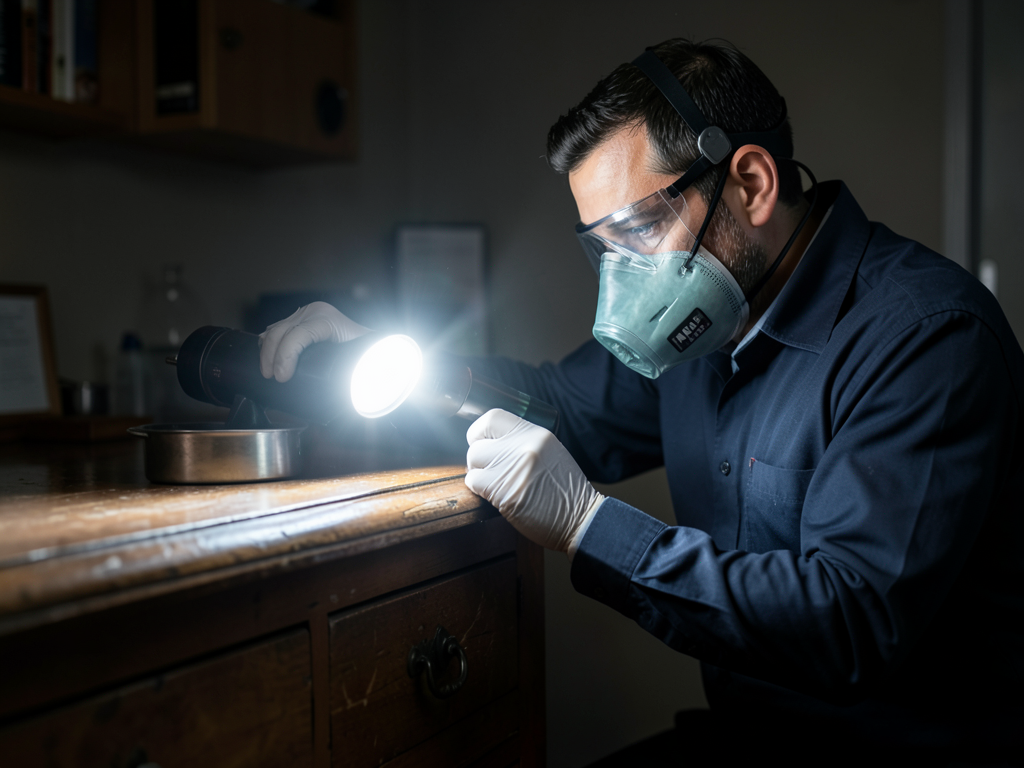
Personal protective equipment is non-negotiable. N95 respirators filter mold spores before they reach your lungs. Nitrile gloves prevent skin contact with active growth. Safety glasses protect against airborne particles during cleaning attempts.
A HEPA vacuum with brush attachment removes surface spores without redistributing them into the air. Standard vacuums simply blow spores around your workspace. The HEPA filter traps particles as small as 0.3 microns. EPA Mold Guidelines.
Isopropyl alcohol in a spray bottle serves as a mild disinfectant for non-porous surfaces. White vinegar works on finished wood but can damage delicate antique patinas. Always test cleaning solutions on inconspicuous areas first.
Plastic sheeting creates containment zones when working outdoors or in garages. This prevents cross-contamination with your living space. Heavy-duty trash bags hold contaminated materials for proper disposal.
Document everything with photos. Date-stamped images help track changes over time and provide documentation if you need to file insurance claims later.
Step-by-step inspection process
- Visual surface examination
Start with good lighting. Check all visible surfaces for discoloration, spotting, or unusual textures. Pay special attention to joints, carvings, and areas where dust accumulates. Mold often appears as darker patches that seem to grow from within the wood rather than sitting on top.
- Odor detection test
Musty or earthy smells indicate active mold growth even when no visible signs exist. Close the piece for 30 minutes in a sealed plastic bag, then open and smell immediately. The concentrated odor reveals problems your nose might miss in open air.
- Moisture content measurement
Use a moisture meter on multiple wood surfaces. Readings above 15% relative moisture content suggest active growth conditions. Test both finished and unfinished areas, as mold often grows beneath protective coatings.
- Hidden area investigation
Remove drawers and check undersides, backs, and interior surfaces. Use a flashlight to examine dark corners and crevices. Mold frequently grows where air circulation is poorest and moisture accumulates.
- Upholstery examination
Check seams, tufts, and underneath fabric for signs of growth. Lift cushions and inspect the frame beneath. Mold in upholstery spreads rapidly through fabric fibers and padding. Rapid Response Flood Extraction.
- Documentation and decision making
Photograph all findings and assess the extent of contamination. Determine whether the piece is salvageable or poses too great a risk to your home environment.
Common mold hiding spots in vintage furniture
Drawer bottoms and cabinet interiors often harbor mold because these areas rarely see light or air circulation. The combination of darkness and trapped moisture creates perfect growing conditions for various mold species.
Carved details and ornate trim provide countless microscopic hiding places for spores. The intricate patterns in Victorian furniture or Art Deco pieces make thorough cleaning nearly impossible without professional equipment.
Joinery areas where wood pieces connect often retain moisture longer than flat surfaces. Dovetail joints, mortise and tenon connections, and glued seams can hide active growth for years without detection.
Underneath felt or fabric linings in jewelry boxes, desk drawers, and cabinet bottoms creates another common problem area. The fabric traps moisture against wood surfaces while preventing air circulation.
Hardware attachments like drawer pulls, hinges, and decorative metal pieces can trap moisture against wood. The metal conducts temperature changes that cause condensation on surrounding wood surfaces.
Old glue residues from previous repairs often contain organic compounds that feed mold growth. Areas with multiple repair attempts typically show higher contamination rates than original construction.
When DIY inspection isn’t enough
Certain situations demand professional intervention. Pieces with extensive visible growth covering more than 10 square feet require specialized containment and removal procedures. The EPA recommends professional remediation for areas exceeding this threshold. Mold Remediation & Removal.
High-value antiques with suspected mold growth need expert evaluation before any cleaning attempts. Harsh chemicals or aggressive cleaning can destroy finishes worth thousands of dollars. A professional conservator understands which techniques preserve both the piece and its historical value.
Multiple pieces showing similar contamination patterns suggest a larger environmental issue. If you’re finding mold on several vintage finds, your storage area or home may have humidity problems requiring professional assessment.
Health concerns elevate the urgency. Anyone with asthma, allergies, or compromised immune systems should never handle questionable pieces. The risk of respiratory distress outweighs potential savings from DIY restoration.
Legal requirements may apply in certain situations. Franklin County health regulations require professional remediation for mold affecting more than 25 square feet in commercial properties. While residential guidelines are less strict, insurance companies often demand professional documentation for claims.
Time constraints matter too. If you need the piece quickly for an event or home staging, professional services offer faster turnaround with guaranteed results. DIY methods often require multiple treatment cycles over weeks or months.
Safe cleaning methods for contaminated pieces
HEPA vacuuming removes surface spores without redistributing them. Work systematically from top to bottom, using overlapping strokes. Empty the vacuum outdoors immediately after use to prevent spore escape into your living space.
Isopropyl alcohol at 70% concentration kills most common mold species on contact. Apply with a soft cloth rather than spraying directly on the surface. This prevents oversaturation while ensuring complete coverage of affected areas.
Distilled white vinegar works on finished surfaces but requires longer contact time. Apply, wait 60 minutes, then wipe clean. The acetic acid penetrates porous surfaces to reach embedded spores. However, vinegar can etch certain finishes and should be tested first.
Borax solution offers a gentler alternative for delicate antiques. Mix one cup borax with one gallon warm water. This creates a mild alkaline solution that inhibits future mold growth without damaging most finishes.
Never use bleach on antique furniture. While effective on non-porous surfaces, bleach damages wood fibers, breaks down finishes, and can create toxic fumes when mixed with other cleaning products. The damage often exceeds the mold problem.
Commercial mold removers designed for wood furniture provide the safest option for valuable pieces. These products balance effectiveness with finish preservation. Always follow manufacturer instructions precisely.
Preventing future mold growth
Control humidity levels between 35% and 50% to prevent mold recurrence. Use dehumidifiers in basements and during humid summer months. Olde Towne East homes often benefit from whole-house dehumidification systems due to their historic construction.
Improve air circulation around furniture pieces. Avoid pushing items directly against walls where air cannot circulate. Leave at least two inches of clearance on all sides for proper ventilation.
Address any water leaks immediately. Even small drips create conditions for mold growth within 24-48 hours. Check plumbing connections, roof penetrations, and foundation walls regularly for signs of moisture intrusion.
Use mold-resistant finishes on restored pieces. Modern sealants provide better protection than historical finishes while maintaining the antique appearance. Consult with a furniture restoration specialist about appropriate products for your specific pieces.
Regular cleaning prevents dust accumulation that can harbor mold spores. Use microfiber cloths that trap particles rather than spreading them. Clean both sides of items and underneath where dust collects.
Monitor temperature fluctuations. Rapid changes cause condensation on cool surfaces. Maintain consistent indoor temperatures when possible, especially in rooms with valuable or antique furniture.
Olde Towne East specific considerations
Olde Towne East’s historic district status means many homes retain original wood windows and plaster walls. These features, while beautiful, often lack modern moisture barriers. Vintage furniture in these homes faces higher risk from ambient humidity.
The neighborhood’s mix of architectural styles, from Victorian mansions to Craftsman bungalows, means varying levels of original construction quality. Some homes have better moisture management than others, affecting how you should handle vintage finds.
Columbus’s climate creates unique challenges. The city experiences 140 days of precipitation annually, with summer humidity often exceeding 70%. This moisture load affects both outdoor storage of furniture finds and indoor conditions once pieces enter your home.
Many Olde Towne East properties sit on clay soil common to Franklin County. This soil retains moisture and can create foundation dampness that affects basement storage areas. Furniture stored in these conditions often arrives pre-contaminated.
The neighborhood’s mature tree canopy, while beautiful, reduces air circulation around homes. Poor ventilation increases indoor humidity levels, particularly in summer months when trees are fully leafed.
Local regulations may affect restoration approaches. The Olde Towne East Historic District guidelines restrict certain chemical treatments and require documentation for significant alterations to original features.
Cost considerations for mold remediation
Professional mold remediation costs vary significantly based on contamination extent. Small surface treatments for minor growth typically range from $200 to $500. Extensive structural cleaning can exceed $2,000 for valuable antiques requiring specialized handling.
DIY cleaning supplies cost under $50 but carry hidden risks. Improper techniques can permanently damage valuable pieces or spread contamination throughout your home. The potential cost of replacing damaged furniture or addressing whole-house mold issues far exceeds professional service fees.
Insurance coverage for mold damage varies by policy. Standard homeowners insurance rarely covers mold resulting from maintenance issues or gradual water intrusion. However, sudden pipe bursts or storm damage may qualify for coverage with proper documentation. Fixing storm and flood damage in Hilliard after heavy rains.
Prevention costs less than remediation. Investing in quality dehumidifiers, moisture meters, and proper storage solutions prevents most mold problems before they start. These tools pay for themselves through preserved furniture value and avoided remediation expenses.
Consider the piece’s value when deciding between DIY and professional approaches. A $50 thrift store find merits different handling than a $5,000 antique requiring conservation-level treatment.
Frequently Asked Questions
How can I tell if mold on my vintage furniture is dangerous?
Black mold with a slimy texture and musty odor poses the highest health risk. However, all mold growth indicates moisture problems that can worsen over time. Any visible mold should be treated as potentially hazardous, especially for people with respiratory issues.
Can I save a piece with extensive mold growth?
Many heavily contaminated pieces can be restored by professionals using specialized techniques. The decision depends on the piece’s value, the mold type, and the extent of penetration into the wood. Some items require complete disassembly and reconstruction of affected components.
How long does mold take to grow on furniture?
Under ideal conditions, mold can establish visible growth within 24-48 hours. However, many pieces develop problems gradually over months or years in storage. The presence of any mold indicates conditions have been favorable for growth for some time.
Should I wear a mask when inspecting furniture for mold?
Yes, always wear an N95 respirator when examining potentially contaminated furniture. Mold spores become airborne easily during handling and can cause respiratory issues. The small investment in protective equipment prevents health problems and cross-contamination.
Can mold spread from one piece of furniture to another?
Absolutely. Mold spreads through airborne spores that settle on nearby surfaces. Contaminated furniture in storage can infect surrounding pieces. Always isolate questionable items and clean the storage area thoroughly before introducing new furniture.
What humidity level prevents mold growth?
Maintain indoor humidity between 35% and 50% to inhibit most mold species. Use dehumidifiers during humid months and ensure proper ventilation in storage areas. Monitor humidity with a digital hygrometer to maintain optimal conditions.
How do I dispose of moldy furniture safely?
Seal contaminated items in heavy-duty plastic bags before moving them through your home. Contact your local waste management for proper disposal procedures. Some areas require special handling for mold-contaminated materials to prevent environmental contamination.
Final inspection checklist
Before bringing any vintage furniture into your Olde Towne East home, run through this final checklist. It takes less than five minutes but could save you thousands in remediation costs and protect your family’s health.
Visual inspection complete? Check all surfaces with bright lighting for discoloration, spotting, or unusual textures. Don’t forget hidden areas like drawer bottoms and cabinet interiors.
Odor test performed? Seal the piece in a plastic bag for 30 minutes, then open and smell immediately. Musty or earthy odors indicate active growth even without visible signs.
Moisture content measured? Use a moisture meter on multiple surfaces. Readings above 15% suggest active growth conditions requiring professional evaluation.
Personal protection in place? Always wear an N95 respirator and nitrile gloves when handling questionable pieces. Safety glasses provide additional protection against airborne particles.
Containment plan ready? Have plastic sheeting and heavy-duty bags available if you discover problems during inspection. Never carry contaminated items through your living space without proper containment.
When in doubt, call a professional. The cost of expert evaluation pales compared to the expense of whole-house mold remediation or the loss of valuable antiques to improper cleaning attempts.
Olde Towne East’s historic charm deserves protection. Your vintage furniture finds can enhance your home’s character without compromising your health or property value. The key lies in proper inspection before bringing anything inside.
Ready to bring that perfect vintage piece home? Don’t risk your health or your historic property. Call (614) 707-7505 today to schedule a professional inspection before that furniture finds its way into your Olde Towne East home. Our certified technicians can evaluate contamination risks and recommend safe handling procedures that protect both your investment and your family’s wellbeing.
Don’t wait until that musty smell becomes a health hazard. Pick up the phone and call (614) 707-7505 before the next vintage market trip. Your Olde Towne East home deserves protection from hidden mold threats. For more information, visit CDC Mold Information.
{
“@context”: “https://schema.org”,
“@type”: “BlogPosting”,
“headline”: “How to check vintage furniture finds for hidden mold before bringing them into your Olde Towne East home”,
“description”: “Discover expert mold inspection techniques for vintage furniture before bringing finds into your Olde Towne East home. Learn to spot hidden growth, prevent spore spread, and protect your health.”,
“wordCount”: 2702,
“datePublished”: “2026-06-07T06:29:00.000Z”,
“dateModified”: “2026-06-07T06:29:00.000Z”,
“inLanguage”: “en-US”,
“mainEntityOfPage”: {
“@type”: “WebPage”,
“@id”: “https://fivestarwaterdamagerestorationcolumbus.com”
},
“publisher”: {
“@type”: “LocalBusiness”,
“name”: “Five Star Water Damage Restoration Columbus”,
“url”: “https://fivestarwaterdamagerestorationcolumbus.com”
},
“author”: {
“@type”: “Organization”,
“name”: “Five Star Water Damage Restoration Columbus”,
“url”: “https://fivestarwaterdamagerestorationcolumbus.com”
},
“image”: {
“@type”: “ImageObject”,
“url”: “https://fivestarwaterdamagerestorationcolumbus.com/wp-content/uploads/2026/03/how-to-check-vintage-furniture-finds-for-hidden-mo-1.png”
}
}
{
“@context”: “https://schema.org”,
“@type”: “LocalBusiness”,
“name”: “Five Star Water Damage Restoration Columbus”,
“url”: “https://fivestarwaterdamagerestorationcolumbus.com”,
“address”: {
“@type”: “PostalAddress”,
“addressLocality”: “Columbus”
},
“areaServed”: {
“@type”: “City”,
“name”: “Columbus”
}
}
{
“@context”: “https://schema.org”,
“@type”: “FAQPage”,
“mainEntity”: [
{
“@type”: “Question”,
“name”: “How can I tell if mold on my vintage furniture is dangerous?”,
“acceptedAnswer”: {
“@type”: “Answer”,
“text”: “Black mold with a slimy texture and musty odor poses the highest health risk. However, all mold growth indicates moisture problems that can worsen over time. Any visible mold should be treated as potentially hazardous, especially for people with respiratory issues.”
}
},
{
“@type”: “Question”,
“name”: “Can I save a piece with extensive mold growth?”,
“acceptedAnswer”: {
“@type”: “Answer”,
“text”: “Many heavily contaminated pieces can be restored by professionals using specialized techniques. The decision depends on the piece’s value, the mold type, and the extent of penetration into the wood. Some items require complete disassembly and reconstruction of affected components.”
}
},
{
“@type”: “Question”,
“name”: “How long does mold take to grow on furniture?”,
“acceptedAnswer”: {
“@type”: “Answer”,
“text”: “Under ideal conditions, mold can establish visible growth within 24-48 hours. However, many pieces develop problems gradually over months or years in storage. The presence of any mold indicates conditions have been favorable for growth for some time.”
}
},
{
“@type”: “Question”,
“name”: “Should I wear a mask when inspecting furniture for mold?”,
“acceptedAnswer”: {
“@type”: “Answer”,
“text”: “Yes, always wear an N95 respirator when examining potentially contaminated furniture. Mold spores become airborne easily during handling and can cause respiratory issues. The small investment in protective equipment prevents health problems and cross-contamination.”
}
},
{
“@type”: “Question”,
“name”: “Can mold spread from one piece of furniture to another?”,
“acceptedAnswer”: {
“@type”: “Answer”,
“text”: “Absolutely. Mold spreads through airborne spores that settle on nearby surfaces. Contaminated furniture in storage can infect surrounding pieces. Always isolate questionable items and clean the storage area thoroughly before introducing new furniture.”
}
},
{
“@type”: “Question”,
“name”: “What humidity level prevents mold growth?”,
“acceptedAnswer”: {
“@type”: “Answer”,
“text”: “Maintain indoor humidity between 35% and 50% to inhibit most mold species. Use dehumidifiers during humid months and ensure proper ventilation in storage areas. Monitor humidity with a digital hygrometer to maintain optimal conditions.”
}
},
{
“@type”: “Question”,
“name”: “How do I dispose of moldy furniture safely?”,
“acceptedAnswer”: {
“@type”: “Answer”,
“text”: “Seal contaminated items in heavy-duty plastic bags before moving them through your home. Contact your local waste management for proper disposal procedures. Some areas require special handling for mold-contaminated materials to prevent environmental contamination.”
}
}
]
}
{
“@context”: “https://schema.org”,
“@type”: “HowTo”,
“name”: “How to inspect vintage furniture for mold”,
“step”: [
{
“@type”: “HowToStep”,
“position”: 1,
“name”: “Visual surface examination”,
“text”: “Start with good lighting. Check all visible surfaces for discoloration, spotting, or unusual textures. Pay special attention to joints, carvings, and areas where dust accumulates. Mold often appears as darker patches that seem to grow from within the wood rather than sitting on top.”
},
{
“@type”: “HowToStep”,
“position”: 2,
“name”: “Odor detection test”,
“text”: “Musty or earthy smells indicate active mold growth even when no visible signs exist. Close the piece for 30 minutes in a sealed plastic bag, then open and smell immediately. The concentrated odor reveals problems your nose might miss in open air.”
},
{
“@type”: “HowToStep”,
“position”: 3,
“name”: “Moisture content measurement”,
“text”: “Use a moisture meter on multiple wood surfaces. Readings above 15% relative moisture content suggest active growth conditions. Test both finished and unfinished areas, as mold often grows beneath protective coatings.”
},
{
“@type”: “HowToStep”,
“position”: 4,
“name”: “Hidden area investigation”,
“text”: “Remove drawers and check undersides, backs, and interior surfaces. Use a flashlight to examine dark corners and crevices. Mold frequently grows where air circulation is poorest and moisture accumulates.”
},
{
“@type”: “HowToStep”,
“position”: 5,
“name”: “Upholstery examination”,
“text”: “Check seams, tufts, and underneath fabric for signs of growth. Lift cushions and inspect the frame beneath. Mold in upholstery spreads rapidly through fabric fibers and padding. Rapid Response Flood Extraction.”
},
{
“@type”: “HowToStep”,
“position”: 6,
“name”: “Documentation and decision making”,
“text”: “Photograph all findings and assess the extent of contamination. Determine whether the piece is salvageable or poses too great a risk to your home environment.”
}
],
“image”: “https://fivestarwaterdamagerestorationcolumbus.com/wp-content/uploads/2026/03/how-to-check-vintage-furniture-finds-for-hidden-mo-1.png”
}
{
“@context”: “https://schema.org”,
“@type”: “BreadcrumbList”,
“itemListElement”: [
{
“@type”: “ListItem”,
“position”: 1,
“name”: “Home”,
“item”: “https://fivestarwaterdamagerestorationcolumbus.com”
},
{
“@type”: “ListItem”,
“position”: 2,
“name”: “Blog”,
“item”: “https://fivestarwaterdamagerestorationcolumbus.com/blog”
},
{
“@type”: “ListItem”,
“position”: 3,
“name”: “How to check vintage furniture finds for hidden mold before bringing them into your Olde Towne East home”
}
]
}
{
“@context”: “https://schema.org”,
“@type”: “Service”,
“serviceType”: “Water Damage Restoration”,
“provider”: {
“@type”: “LocalBusiness”,
“name”: “Five Star Water Damage Restoration Columbus”,
“url”: “https://fivestarwaterdamagerestorationcolumbus.com”
},
“areaServed”: {
“@type”: “City”,
“name”: “Columbus”
},
“description”: “Discover expert mold inspection techniques for vintage furniture before bringing finds into your Olde Towne East home. Learn to spot hidden growth, prevent spore spread, and protect your health.”
}