
How to handle a second floor bathroom leak that reaches your Lewis Center ceiling
A bathroom leak on the second floor of your Lewis Center home can quickly turn into a ceiling disaster. Water follows gravity, and once it breaches your bathroom floor, it travels through ceiling cavities, soaking insulation and weakening drywall. The first sign is often a discolored spot or sagging area on your first-floor ceiling directly below the bathroom. Professional water damage restoration for Short North shops and galleries.
Time matters. A small leak can saturate ceiling materials within hours, creating perfect conditions for mold growth in Central Ohio’s humid climate. The moisture also weakens structural components, potentially leading to ceiling collapse. Quick action prevents expensive repairs and protects your family’s health. EPA mold information.
Immediate steps to take when you discover the leak
Safety comes first. Water and electricity create a deadly combination. If you see water dripping near light fixtures or outlets, shut off power to the affected area at your circuit breaker. Never touch electrical components with wet hands or while standing on wet surfaces.. Read more about Dealing with water damage when you live in a Columbus HOA or condo association.
Next, stop the water source. Locate your home’s main water shut-off valve. In most Lewis Center homes built after 2000, you’ll find it near the water meter in the basement or crawl space. Turn the valve clockwise until it stops. If you cannot find the main valve, shut off individual supply lines under bathroom fixtures.
Contain the water. Place buckets, pots, or towels under active drips. For ceiling bulges, which indicate trapped water, use a screwdriver to carefully puncture the lowest point of the bulge. This releases pressure and prevents ceiling collapse. Have a bucket ready to catch the water.
Document everything. Take photos of the leak source, water damage, and affected areas before cleanup begins. These images help with insurance claims and help restoration professionals assess the full scope of damage. Frozen pipe cleanup and repair in Gahanna before the damage spreads.
Common causes of second floor bathroom leaks in Lewis Center homes
Supply line failures cause most bathroom ceiling leaks in Lewis Center. The area’s homes range from 1990s developments to newer constructions, each with different plumbing vulnerabilities. Older homes may have polybutylene pipes that become brittle over time. Newer homes might suffer from poor installation or manufacturing defects in PEX fittings.
Toilet supply lines frequently fail due to constant pressure and movement. The rubber washers inside compression fittings degrade, especially in homes with hard water common in Delaware County. A single failed washer can release hundreds of gallons before you notice.
Shower and tub drain assemblies represent another major failure point. The connection between the drain body and waste pipe relies on compression gaskets that can fail over time. In second floor bathrooms, even small leaks create significant ceiling damage because water has nowhere to go but down through ceiling cavities.
Water supply lines to sinks and toilets connect to angle stops that contain small internal seals. These seals fail from age, water quality, or improper installation. When they fail, water sprays behind walls where you cannot see it until it appears on your ceiling below.
Why Lewis Center’s construction patterns matter
Lewis Center’s rapid growth since the 1990s created diverse construction methods. Homes in older sections like Shawnee Hills often feature copper supply lines with compression fittings that can loosen over time. Newer developments might use PEX piping, which resists freezing but can fail at connection points if not properly installed. Rapid Response Flood Extraction.
The area’s soil composition affects plumbing longevity. Lewis Center sits on clay-rich soil that expands and contracts with moisture changes. This movement stresses underground supply lines and can cause fittings to loosen over time. Homes built on poorly compacted fill dirt face additional settling issues that stress plumbing connections.
Many Lewis Center homes feature engineered floor systems with open web joists. While these provide efficient structural support, they create channels for water to travel horizontally before dropping to the ceiling below. A leak near a wall can travel several feet before becoming visible, making source identification challenging.
Hidden dangers lurking in your ceiling
Water trapped in ceiling cavities creates multiple hazards. First, the weight of saturated materials can cause ceiling collapse. Drywall weighs approximately 2 pounds per square foot when dry. When saturated, that weight can triple, creating dangerous conditions above living spaces.. Read more about Knowing when to cut or keep wet drywall in your Westerville home.
Insulation in ceiling cavities acts like a sponge. Fiberglass insulation loses its insulating properties when wet and becomes a breeding ground for mold. Cellulose insulation, common in older Lewis Center homes, can compress and create permanent ceiling sags even after drying.
Electrical wiring runs through many ceiling cavities. Water contact with wiring creates shock hazards and can cause short circuits that lead to fires. The combination of water, electricity, and wood creates a dangerous situation requiring immediate professional attention.
Mold growth begins within 24-48 hours in Central Ohio’s climate. Once established, mold spreads through ceiling cavities via airborne spores. The dark, warm environment behind your ceiling provides perfect growing conditions for black mold and other harmful varieties.
Professional restoration process for ceiling water damage
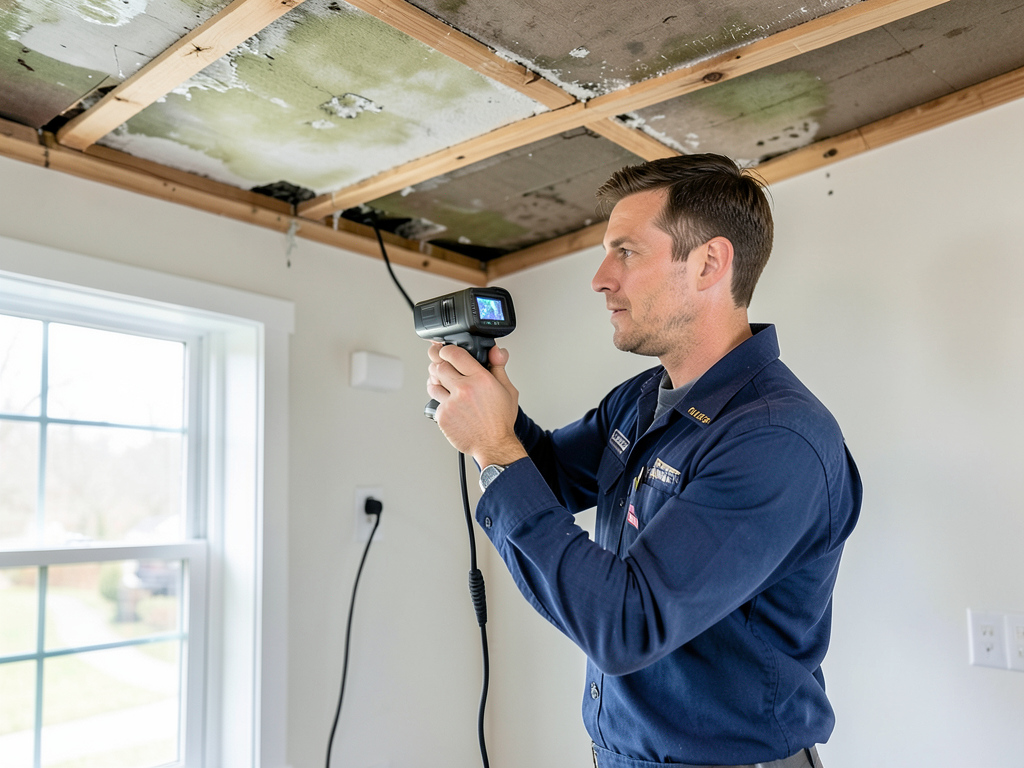
Professional restoration follows a systematic approach based on IICRC S500 standards for water damage restoration. The process begins with moisture mapping using thermal imaging cameras and penetrating moisture meters. These tools detect water in wall cavities and ceiling spaces that appear dry to the naked eye. IICRC S500 standards.
Water extraction removes standing water from ceiling cavities. Technicians use specialized equipment to vacuum water from insulation and drywall without causing additional damage. The goal is removing as much water as possible before structural drying begins.
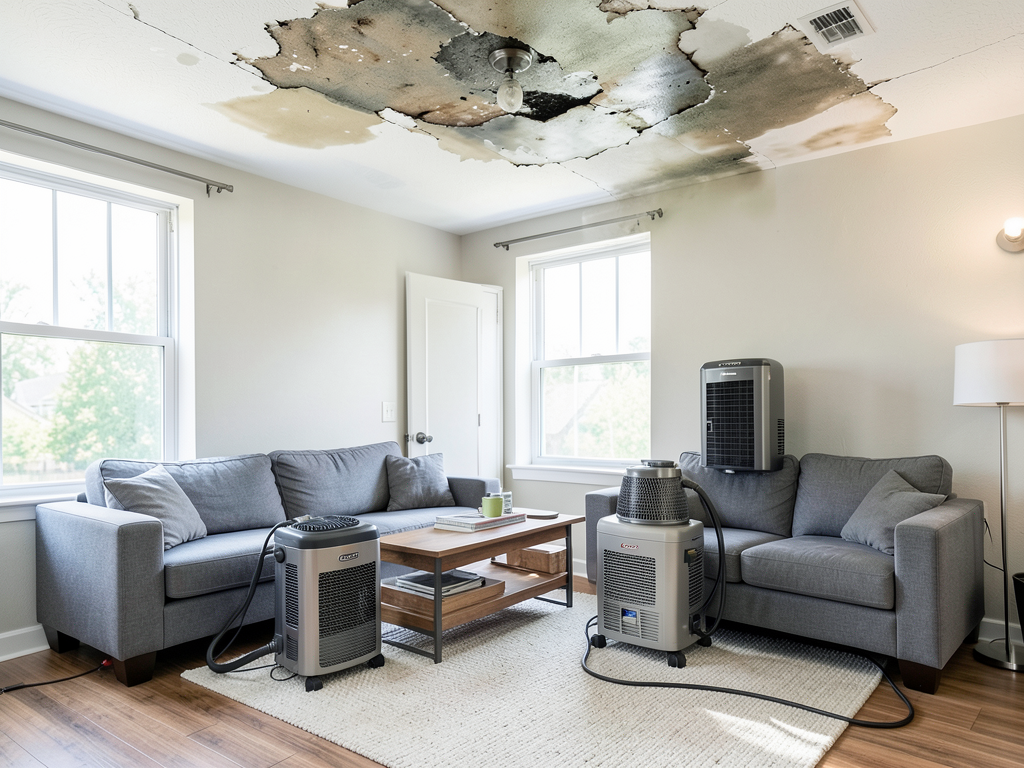
Structural drying involves industrial air movers and dehumidifiers. Air movers create high-velocity airflow across wet surfaces, accelerating evaporation. Dehumidifiers remove moisture from the air, preventing secondary damage and speeding the drying process. The combination can reduce drying time from weeks to days.
Content manipulation protects your belongings during restoration. Technicians move furniture, electronics, and personal items away from affected areas. Items too large to move receive protective covering to prevent secondary damage from dust and moisture.
Insurance considerations for ceiling water damage
Homeowner’s insurance typically covers sudden, accidental water damage from plumbing failures. However, coverage varies significantly between policies. Some exclude damage from frozen pipes or require specific endorsements for full coverage.
Documentation requirements affect claim success. Insurance companies require proof of damage extent, cause determination, and mitigation efforts. Professional restoration companies provide detailed documentation including moisture readings, damage photographs, and repair estimates that satisfy insurance requirements.
Ohio follows specific regulations regarding water damage claims. The Ohio Department of Insurance requires companies to provide written estimates and cannot charge for emergency services if the customer declines the full restoration work. Understanding these regulations protects homeowners from unfair billing practices.
Time limits affect coverage. Most policies require notification within a specific timeframe after discovering damage. Waiting too long can result in claim denial based on negligence or failure to mitigate damages.
Preventing future bathroom ceiling leaks
Regular plumbing inspections identify potential failure points before they cause damage. Check supply lines annually for signs of wear including corrosion, bulging, or moisture around fittings. Replace supply lines every 5-7 years as preventive maintenance.
Install water detection devices near toilets, under sinks, and around water heaters. These inexpensive devices sound alarms when they detect moisture, providing early warning before significant damage occurs. Some smart home systems can automatically shut off water when leaks are detected.
Consider upgrading to braided stainless steel supply lines. These resist bursting and provide better protection than standard rubber or plastic lines. The initial investment costs less than repairing water damage from a single supply line failure.
Maintain proper water pressure. Excessive pressure stresses plumbing components and accelerates wear. Install a pressure reducing valve if your home’s water pressure exceeds 80 PSI. Most Lewis Center homes function well at 50-60 PSI.
When to call a professional immediately
Certain situations require immediate professional intervention. If water affects electrical systems, continues flowing despite shut-off attempts, or causes structural concerns like ceiling sagging, call professionals right away. These situations pose safety risks that exceed typical homeowner capabilities. What to do right now if your Dublin basement just flooded.
Large-scale damage requires professional equipment and expertise. If water affects multiple rooms, structural components, or contains contaminants, DIY cleanup proves inadequate. Professionals have specialized equipment to detect hidden moisture and prevent secondary damage.
Time-sensitive situations demand quick professional response. Water sitting longer than 24 hours creates mold growth conditions. Professional restoration within this window prevents mold establishment and reduces overall restoration costs.
Insurance claim situations benefit from professional documentation. Restoration companies provide detailed reports, moisture maps, and damage assessments that satisfy insurance requirements and support claim approval.
Local resources for Lewis Center homeowners
Lewis Center’s location in Delaware County affects restoration response times and available resources. The area’s proximity to major highways allows quick professional response, typically within 60 minutes for emergency calls. This rapid response proves crucial for preventing secondary damage.
Local building codes influence restoration approaches. Delaware County follows Ohio Building Code requirements for moisture barriers and ventilation in bathroom construction. Professional restorers understand these requirements and ensure repairs meet current standards.
Weather patterns in Central Ohio create specific challenges. Winter freeze-thaw cycles stress plumbing systems, while summer humidity affects drying times. Professional restorers adjust their approaches based on seasonal conditions to ensure complete moisture removal.
Community resources include local building departments that can provide information about permit requirements for ceiling repairs. Some repairs require permits, especially those affecting structural components or electrical systems.
Understanding your home’s plumbing system
Knowledge of your home’s plumbing layout helps identify leak sources quickly. Most Lewis Center homes built in the 1990s and 2000s use similar plumbing configurations. Bathroom supply lines typically run through interior walls to exterior walls where fixtures mount.
Water supply lines use different materials based on construction era. Older homes might feature copper piping with soldered joints. Newer constructions often use PEX tubing with compression fittings. Each material has different failure modes and lifespans.
Drain systems use PVC or ABS plastic piping that connects to cast iron or PVC main stacks. These connections rely on compression gaskets that can fail over time. Drain leaks often go unnoticed longer than supply line leaks because they only occur during fixture use.
Water pressure regulators protect plumbing components from excessive pressure. Homes without regulators face increased failure rates in supply lines and fixtures. Testing water pressure with a simple gauge helps identify potential problems before failures occur.
Emergency response checklist
Keep this checklist accessible for bathroom leak emergencies:
- Shut off water supply immediately
- Turn off electricity to affected areas
- Contain active water with buckets and towels
- Document damage with photos
- Call professional restoration service
- Begin drying process with fans if safe
- Protect unaffected belongings
Following this sequence prevents additional damage and ensures safety during the emergency response.
Cost factors in ceiling water damage restoration
Restoration costs vary based on damage extent, materials affected, and required repairs. Minor ceiling repairs might cost a few hundred dollars, while extensive damage requiring structural repairs can exceed several thousand dollars.
Insurance coverage significantly impacts out-of-pocket costs. Policies with higher coverage limits and lower deductibles reduce homeowner expenses. Understanding your policy details before emergencies occur helps manage financial expectations.
Response time affects overall costs. Quick professional intervention prevents secondary damage that increases restoration complexity and expense. The cost of emergency service often proves less expensive than addressing established mold growth or structural damage.
Material selection influences repair costs. Standard drywall repairs cost less than restoring plaster ceilings or addressing water-damaged hardwood flooring that may exist in older Lewis Center homes.
Frequently Asked Questions
How long does it take to dry a water-damaged ceiling?
Drying time depends on damage extent, materials affected, and environmental conditions. Minor damage might dry within 24-48 hours with professional equipment. Extensive saturation requiring cavity drying can take 3-5 days. Central Ohio’s humidity affects drying times, sometimes extending the process.
Can I repair water-damaged ceiling myself?
Small cosmetic damage might allow DIY repair, but most ceiling water damage requires professional intervention. Professionals detect hidden moisture, prevent mold growth, and ensure structural integrity. DIY attempts often miss underlying problems that cause recurring damage.
Will my insurance cover ceiling water damage?
Most policies cover sudden, accidental water damage from plumbing failures. However, coverage varies by policy specifics. Some exclude certain causes or require specific endorsements. Professional restoration companies work with insurance providers to document damage and support claims.
How can I tell if mold is growing in my ceiling?
Mold indicators include musty odors, visible discoloration, and health symptoms like increased allergies or respiratory issues. Professional moisture testing detects mold before it becomes visible. Central Ohio’s humidity creates conditions where mold can establish within 24-48 hours of water exposure.
What should I do if my ceiling is sagging?
Sagging indicates trapped water and potential structural failure. Immediately move belongings away from the area and avoid the room if possible. Use a screwdriver to carefully puncture the lowest point of the sag, catching water in buckets. Call professionals immediately, as sagging ceilings can collapse without warning.
Don’t wait until your ceiling collapses
Second floor bathroom leaks create dangerous conditions that worsen by the hour. The combination of water weight, electrical hazards, and mold growth potential makes quick professional response essential. Every hour of delay increases restoration costs and health risks.
Our team understands Lewis Center’s specific construction patterns and responds within 60 minutes for emergency calls. We use professional-grade equipment to detect hidden moisture, prevent mold growth, and restore your home to pre-loss condition.
Call (614) 707-7505 now for 24/7 emergency service. Don’t risk ceiling collapse or mold exposure. Our certified technicians arrive prepared to stop the damage and begin restoration immediately. Your family’s safety and your home’s integrity depend on quick, professional action.
Pick up the phone and call (614) 707-7505 before the next storm hits or the next pipe fails. We’re ready to protect your Lewis Center home from ceiling water damage. Fixing storm and flood damage in Hilliard after heavy rains.
You may also find this helpful. What to do when your Harrison West neighbor’s apartment floods into yours.
{
“@context”: “https://schema.org”,
“@type”: “BlogPosting”,
“headline”: “How to handle a second floor bathroom leak that reaches your Lewis Center ceiling”,
“description”: “Learn immediate steps to stop a second floor bathroom leak in Lewis Center before it damages your ceiling. Call (614) 707-7505 for 24/7 emergency service.”,
“wordCount”: 2342,
“datePublished”: “2026-03-07T13:37:00.000Z”,
“dateModified”: “2026-03-07T13:37:00.000Z”,
“inLanguage”: “en-US”,
“mainEntityOfPage”: {
“@type”: “WebPage”,
“@id”: “https://fivestarwaterdamagerestorationcolumbus.com”
},
“publisher”: {
“@type”: “LocalBusiness”,
“name”: “Five Star Water Damage Restoration Columbus”,
“url”: “https://fivestarwaterdamagerestorationcolumbus.com”
},
“author”: {
“@type”: “Organization”,
“name”: “Five Star Water Damage Restoration Columbus”,
“url”: “https://fivestarwaterdamagerestorationcolumbus.com”
},
“image”: {
“@type”: “ImageObject”,
“url”: “https://fivestarwaterdamagerestorationcolumbus.com/wp-content/uploads/2026/03/how-to-handle-a-second-floor-bathroom-leak-that-re-1.png”
}
}
{
“@context”: “https://schema.org”,
“@type”: “LocalBusiness”,
“name”: “Five Star Water Damage Restoration Columbus”,
“url”: “https://fivestarwaterdamagerestorationcolumbus.com”,
“address”: {
“@type”: “PostalAddress”,
“addressLocality”: “Columbus”
},
“areaServed”: {
“@type”: “City”,
“name”: “Columbus”
}
}
{
“@context”: “https://schema.org”,
“@type”: “FAQPage”,
“mainEntity”: [
{
“@type”: “Question”,
“name”: “How long does it take to dry a water-damaged ceiling?”,
“acceptedAnswer”: {
“@type”: “Answer”,
“text”: “Drying time depends on damage extent, materials affected, and environmental conditions. Minor damage might dry within 24-48 hours with professional equipment. Extensive saturation requiring cavity drying can take 3-5 days. Central Ohio’s humidity affects drying times, sometimes extending the process.”
}
},
{
“@type”: “Question”,
“name”: “Can I repair water-damaged ceiling myself?”,
“acceptedAnswer”: {
“@type”: “Answer”,
“text”: “Small cosmetic damage might allow DIY repair, but most ceiling water damage requires professional intervention. Professionals detect hidden moisture, prevent mold growth, and ensure structural integrity. DIY attempts often miss underlying problems that cause recurring damage.”
}
},
{
“@type”: “Question”,
“name”: “Will my insurance cover ceiling water damage?”,
“acceptedAnswer”: {
“@type”: “Answer”,
“text”: “Most policies cover sudden, accidental water damage from plumbing failures. However, coverage varies by policy specifics. Some exclude certain causes or require specific endorsements. Professional restoration companies work with insurance providers to document damage and support claims.”
}
},
{
“@type”: “Question”,
“name”: “How can I tell if mold is growing in my ceiling?”,
“acceptedAnswer”: {
“@type”: “Answer”,
“text”: “Mold indicators include musty odors, visible discoloration, and health symptoms like increased allergies or respiratory issues. Professional moisture testing detects mold before it becomes visible. Central Ohio’s humidity creates conditions where mold can establish within 24-48 hours of water exposure.”
}
},
{
“@type”: “Question”,
“name”: “What should I do if my ceiling is sagging?”,
“acceptedAnswer”: {
“@type”: “Answer”,
“text”: “Sagging indicates trapped water and potential structural failure. Immediately move belongings away from the area and avoid the room if possible. Use a screwdriver to carefully puncture the lowest point of the sag, catching water in buckets. Call professionals immediately, as sagging ceilings can collapse without warning.”
}
}
]
}
{
“@context”: “https://schema.org”,
“@type”: “BreadcrumbList”,
“itemListElement”: [
{
“@type”: “ListItem”,
“position”: 1,
“name”: “Home”,
“item”: “https://fivestarwaterdamagerestorationcolumbus.com”
},
{
“@type”: “ListItem”,
“position”: 2,
“name”: “Blog”,
“item”: “https://fivestarwaterdamagerestorationcolumbus.com/blog”
},
{
“@type”: “ListItem”,
“position”: 3,
“name”: “How to handle a second floor bathroom leak that reaches your Lewis Center ceiling”
}
]
}
{
“@context”: “https://schema.org”,
“@type”: “Service”,
“serviceType”: “Water Damage Restoration”,
“provider”: {
“@type”: “LocalBusiness”,
“name”: “Five Star Water Damage Restoration Columbus”,
“url”: “https://fivestarwaterdamagerestorationcolumbus.com”
},
“areaServed”: {
“@type”: “City”,
“name”: “Columbus”
},
“description”: “Learn immediate steps to stop a second floor bathroom leak in Lewis Center before it damages your ceiling. Call (614) 707-7505 for 24/7 emergency service.”
}