
Identifying and removing hidden attic mold in Grove City homes
Attic mold in Grove City homes develops silently, thriving in dark, humid spaces above your living area. Many homeowners discover it only during a home inspection or after noticing musty odors. The humid summers and cold winters in Central Ohio create perfect conditions for attic mold growth when ventilation fails or roof leaks occur.
Black mold and other fungal species can damage structural wood and degrade indoor air quality. If left untreated, mold spreads rapidly across attic sheathing and rafters, turning a small moisture problem into a major remediation project. Early detection and professional removal prevent costly structural repairs and protect your family’s health. EPA mold information.
Five Star Water Damage Restoration Columbus provides expert attic mold remediation for Grove City residents. Our certified technicians use containment, HEPA filtration, and antimicrobial treatments to remove mold safely and prevent recurrence. We understand local building patterns and climate factors that contribute to attic mold in 43123 and 43146 zip codes. Professional water damage restoration for Short North shops and galleries.
Common causes of attic mold in Grove City homes
Ohio’s climate creates unique attic mold challenges. Summer humidity often exceeds 70% in Central Ohio, and when warm air meets cold attic surfaces, condensation forms. This moisture feeds mold spores already present on wood surfaces.
Roof leaks represent the most common trigger. Missing shingles, damaged flashing, or ice damming allow water intrusion. Ice dams form when snow melts on warm roof sections and refreezes at colder eaves, creating pools that seep under shingles. The Scioto River basin’s freeze-thaw cycles accelerate this damage.
Poor attic ventilation traps moisture. Many Grove City homes built before 2000 lack proper soffit and ridge vents. Bath exhaust fans vented into attics instead of outside dump warm, moist air directly onto cold surfaces. This creates condensation that promotes mold growth on rafters and insulation.
Attic baffles prevent insulation from blocking soffit vents, but many older homes lack these critical components. Without baffles, insulation blocks airflow, creating stagnant air pockets where moisture accumulates. The result is dark staining on roof sheathing and fuzzy white or black mold colonies.
Call (614) 707-7505 today to schedule your free attic inspection before the next storm hits.
Step-by-step attic mold remediation process
Professional mold remediation follows strict protocols to ensure complete removal and prevent cross-contamination. Our process aligns with IICRC S520 standards for mold remediation, which Grove City homeowners should expect from any qualified contractor. IICRC S520 Standard.
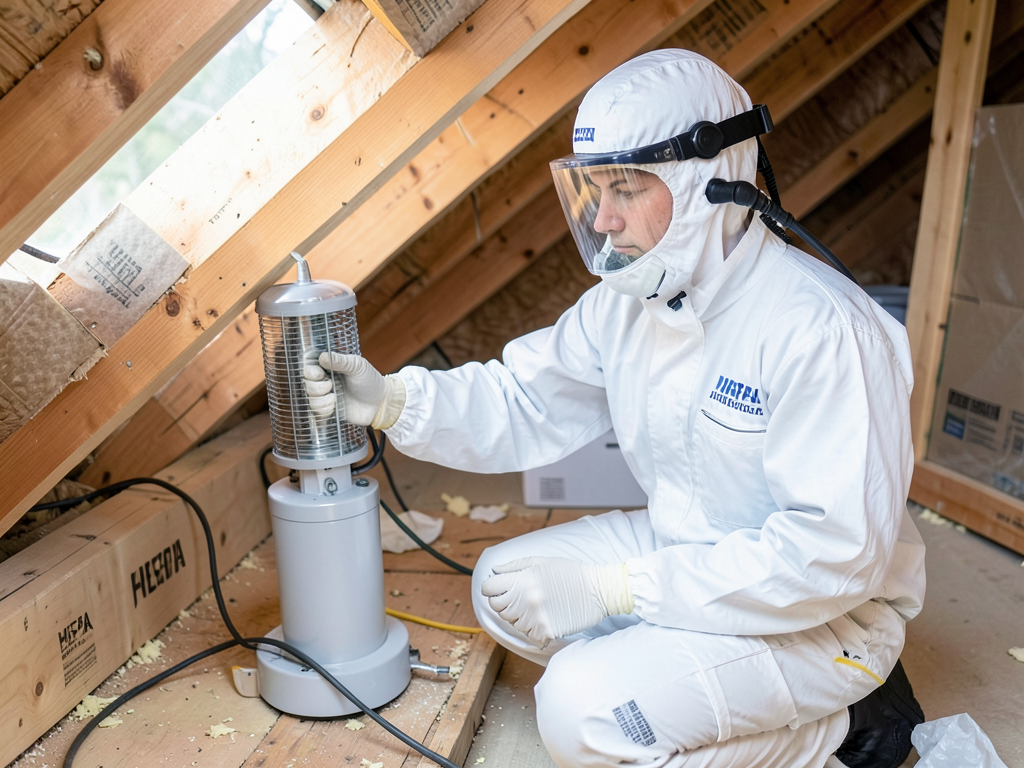
Containment setup begins the process. Technicians install polyethylene barriers and create negative air pressure using HEPA-filtered air scrubbers. This prevents mold spores from spreading to living spaces during removal. The containment area includes all affected attic sections plus a buffer zone.
HEPA vacuuming removes visible mold from surfaces. Our technicians use commercial-grade HEPA vacuums with specialized attachments to clean rafters, sheathing, and insulation. The vacuum captures spores as small as 0.3 microns, preventing them from becoming airborne.
Antimicrobial treatment follows cleaning. We apply EPA-registered biocides to all affected surfaces. These solutions kill remaining mold spores and inhibit future growth. The treatment penetrates wood pores where mold roots (hyphae) extend.
Encapsulation provides long-term protection. After treatment, we apply mold-resistant coatings to cleaned surfaces. These encapsulants create a barrier that prevents moisture penetration and blocks any remaining spores from growing.
Post-remediation verification confirms success. We conduct visual inspections and may recommend air quality testing to verify spore counts meet clearance standards. Only after passing verification do we remove containment barriers. Mold Remediation & Removal.
Signs you need attic mold removal
Musty odors often signal attic mold before visual signs appear. The smell originates from microbial volatile organic compounds (MVOCs) released during mold metabolism. If you notice persistent musty odors in upper-level rooms, especially during humid weather, attic mold may be the source.
Visible dark staining on roof sheathing indicates moisture problems. Black, gray, or green discoloration on plywood or OSB boards suggests active mold growth. White fuzzy patches also indicate fungal colonization. These stains often appear in corners or along roof valleys where ventilation is poorest.
Allergy symptoms that worsen at home may indicate mold exposure. Family members experiencing increased sneezing, coughing, or respiratory irritation when inside could be reacting to attic mold spores circulating through HVAC systems. Symptoms typically improve when away from home.
Ice dam formation on your roof suggests ventilation issues that promote mold growth. If you notice large icicles forming at your eaves each winter, your attic likely traps heat, melting snow that refreezes at the cold edges. This cycle creates moisture problems conducive to mold.
High indoor humidity readings above 60% indicate poor attic ventilation. Use a hygrometer to check humidity levels. Consistently high readings suggest moisture is entering your living space from the attic, likely carrying mold spores with it.
Why choose a Columbus-based specialist for Grove City homes
Local expertise matters for attic mold remediation. Grove City’s specific climate patterns, building codes, and construction methods require specialized knowledge. Our technicians understand how South-Western City School District’s building boom in the 1990s created ventilation patterns that now trap moisture.
We know Grove City’s neighborhoods intimately. Homes in Beulah Park often feature ranch-style construction with shallow roof pitches that promote ice damming. Properties near Pinnacle Golf Club may have steeper roofs but suffer from poor soffit ventilation due to decorative overhangs.
Columbus building codes require specific ventilation ratios that many older Grove City homes don’t meet. The Ohio Residential Code mandates 1 square foot of net free ventilation area per 150 square feet of attic space. Many local homes fall short of this requirement, creating conditions for mold growth.
Our response times reflect local geography. We’re centrally located to serve Grove City quickly, understanding that mold spreads exponentially. A small spot can cover an entire attic in 72 hours under optimal conditions. Our rapid response prevents this escalation. Rapid Response Flood Extraction.
We maintain relationships with local insurance providers familiar with Grove City’s common mold issues. This streamlines the claims process and ensures proper documentation for your insurance company.
Preventing attic mold recurrence
Proper ventilation prevents most attic mold problems. Install continuous soffit and ridge vents to create airflow that carries moisture out. The ridge vent allows hot, moist air to escape while soffit vents draw in cool, dry air. This natural convection cycle keeps attic humidity below mold-growing thresholds.
Correct bathroom fan venting eliminates a major moisture source. Ensure all bathroom exhaust fans vent through the roof or sidewall, never into the attic. This simple fix prevents warm, moist air from condensing on cold attic surfaces during winter months.
Attic insulation upgrades improve both energy efficiency and moisture control. Add baffles to maintain ventilation channels above insulation. Consider spray foam insulation for rim joists, which seals air leaks that allow warm, moist air to enter the attic space.
Regular roof inspections catch problems early. Check for damaged shingles, deteriorated flashing, or clogged gutters each spring and fall. Pay special attention after severe weather events common to Central Ohio, including straight-line winds and hail storms. Fixing storm and flood damage in Hilliard after heavy rains.
Install moisture barriers in crawl spaces if your home has this feature. Moisture from damp crawl spaces can rise through walls and enter the attic. A vapor barrier prevents this moisture migration and reduces overall humidity levels in your home.
Cost factors for attic mold remediation
Attic size significantly impacts remediation costs. A 1,000-square-foot attic requires more labor, materials, and containment than a 500-square-foot space. The extent of mold coverage also affects pricing, with widespread contamination requiring more extensive treatment.
Insulation type influences removal costs. Fiberglass batts can often be cleaned and treated in place, while blown-in cellulose or loose-fill insulation typically requires complete removal and replacement. The disposal of contaminated materials adds to project costs.
Access challenges increase labor time. Low-pitched roofs, tight attic spaces, or complex roof designs requiring extensive containment setup all add to project duration and cost. Homes with cathedral ceilings present unique challenges as these spaces often lack proper ventilation channels.
Testing requirements affect overall expenses. While not always necessary, air quality testing provides documentation for insurance claims and ensures remediation success. Testing typically adds $300-600 to project costs but offers peace of mind and verification.
Insurance coverage varies by policy. Many homeowners policies exclude mold damage unless caused by a covered peril like a sudden pipe burst. Review your policy details or consult with your insurance agent about mold coverage specifics.
Frequently Asked Questions
How long does attic mold remediation take?
Most attic mold remediation projects complete in 2-4 days. Small, contained areas may finish in one day, while extensive contamination requiring insulation replacement takes longer. Weather conditions can affect exterior work like vent installation.
Can I stay in my home during remediation?
Yes, you can typically remain in your home during attic mold remediation. Containment barriers and negative air pressure prevent spores from entering living spaces. However, individuals with severe allergies or respiratory conditions may prefer temporary relocation during the most intensive work phases.
Will mold come back after remediation?
Properly remediated attics with corrected moisture sources rarely experience mold recurrence. However, if ventilation issues persist or new roof leaks develop, mold can return. Annual inspections and prompt repairs of any moisture issues prevent future growth.
How much does attic mold remediation cost?
Costs range from $1,500 to $6,000 depending on attic size, mold extent, and required repairs. Small, contained areas may cost as little as $800, while large attics with insulation replacement can exceed $10,000. Most Grove City homes fall in the $2,500-4,000 range.
Do I need testing after remediation?
Post-remediation testing isn’t always required but provides verification of successful treatment. Testing typically costs $300-600 and confirms spore counts meet clearance standards. Insurance companies or home buyers may require testing documentation for claims or real estate transactions.

Protect your Grove City home from attic mold
Attic mold represents a serious threat to your home’s structure and your family’s health. The humid Ohio climate, combined with common construction practices in Grove City, creates conditions where mold thrives undetected. Early detection through professional inspection prevents minor moisture issues from becoming major remediation projects.
Five Star Water Damage Restoration Columbus combines local expertise with industry-leading remediation techniques. We understand Grove City’s specific building patterns, from the ranch homes in Beulah Park to the newer constructions near Pinnacle. Our technicians use IICRC S520-compliant methods to ensure complete mold removal and prevention.
Don’t wait for musty odors or visible staining to appear. Call (614) 707-7505 today to schedule your free attic inspection. Our certified technicians will assess your attic’s condition, identify potential moisture sources, and provide a clear remediation plan if needed. Early intervention saves money and protects your home’s value.
Pick up the phone and call (614) 707-7505 before the next storm hits. Grove City’s weather patterns make attic mold a year-round concern, but professional remediation provides lasting protection for your home and family.
{
“@context”: “https://schema.org”,
“@type”: “BlogPosting”,
“headline”: “Identifying and removing hidden attic mold in Grove City homes”,
“description”: “Attic mold in Grove City homes? Learn the hidden signs, removal process, and prevention strategies from local experts. Call (614) 707-7505 for a free inspection.”,
“wordCount”: 1826,
“datePublished”: “2026-02-26T07:07:00.000Z”,
“dateModified”: “2026-02-26T07:07:00.000Z”,
“inLanguage”: “en-US”,
“mainEntityOfPage”: {
“@type”: “WebPage”,
“@id”: “https://fivestarwaterdamagerestorationcolumbus.com”
},
“publisher”: {
“@type”: “LocalBusiness”,
“name”: “Five Star Water Damage Restoration Columbus”,
“url”: “https://fivestarwaterdamagerestorationcolumbus.com”
},
“author”: {
“@type”: “Organization”,
“name”: “Five Star Water Damage Restoration Columbus”,
“url”: “https://fivestarwaterdamagerestorationcolumbus.com”
},
“image”: {
“@type”: “ImageObject”,
“url”: “https://fivestarwaterdamagerestorationcolumbus.com/wp-content/uploads/2026/03/identifying-and-removing-hidden-attic-mold-in-grov-1.png”
}
}
{
“@context”: “https://schema.org”,
“@type”: “LocalBusiness”,
“name”: “Five Star Water Damage Restoration Columbus”,
“url”: “https://fivestarwaterdamagerestorationcolumbus.com”,
“address”: {
“@type”: “PostalAddress”,
“addressLocality”: “Columbus”
},
“areaServed”: {
“@type”: “City”,
“name”: “Columbus”
}
}
{
“@context”: “https://schema.org”,
“@type”: “FAQPage”,
“mainEntity”: [
{
“@type”: “Question”,
“name”: “How long does attic mold remediation take?”,
“acceptedAnswer”: {
“@type”: “Answer”,
“text”: “Most attic mold remediation projects complete in 2-4 days. Small, contained areas may finish in one day, while extensive contamination requiring insulation replacement takes longer. Weather conditions can affect exterior work like vent installation.”
}
},
{
“@type”: “Question”,
“name”: “Can I stay in my home during remediation?”,
“acceptedAnswer”: {
“@type”: “Answer”,
“text”: “Yes, you can typically remain in your home during attic mold remediation. Containment barriers and negative air pressure prevent spores from entering living spaces. However, individuals with severe allergies or respiratory conditions may prefer temporary relocation during the most intensive work phases.”
}
},
{
“@type”: “Question”,
“name”: “Will mold come back after remediation?”,
“acceptedAnswer”: {
“@type”: “Answer”,
“text”: “Properly remediated attics with corrected moisture sources rarely experience mold recurrence. However, if ventilation issues persist or new roof leaks develop, mold can return. Annual inspections and prompt repairs of any moisture issues prevent future growth.”
}
},
{
“@type”: “Question”,
“name”: “How much does attic mold remediation cost?”,
“acceptedAnswer”: {
“@type”: “Answer”,
“text”: “Costs range from $1,500 to $6,000 depending on attic size, mold extent, and required repairs. Small, contained areas may cost as little as $800, while large attics with insulation replacement can exceed $10,000. Most Grove City homes fall in the $2,500-4,000 range.”
}
},
{
“@type”: “Question”,
“name”: “Do I need testing after remediation?”,
“acceptedAnswer”: {
“@type”: “Answer”,
“text”: “Post-remediation testing isn’t always required but provides verification of successful treatment. Testing typically costs $300-600 and confirms spore counts meet clearance standards. Insurance companies or home buyers may require testing documentation for claims or real estate transactions.”
}
}
]
}
{
“@context”: “https://schema.org”,
“@type”: “BreadcrumbList”,
“itemListElement”: [
{
“@type”: “ListItem”,
“position”: 1,
“name”: “Home”,
“item”: “https://fivestarwaterdamagerestorationcolumbus.com”
},
{
“@type”: “ListItem”,
“position”: 2,
“name”: “Blog”,
“item”: “https://fivestarwaterdamagerestorationcolumbus.com/blog”
},
{
“@type”: “ListItem”,
“position”: 3,
“name”: “Identifying and removing hidden attic mold in Grove City homes”
}
]
}
{
“@context”: “https://schema.org”,
“@type”: “Service”,
“serviceType”: “Water Damage Restoration”,
“provider”: {
“@type”: “LocalBusiness”,
“name”: “Five Star Water Damage Restoration Columbus”,
“url”: “https://fivestarwaterdamagerestorationcolumbus.com”
},
“areaServed”: {
“@type”: “City”,
“name”: “Columbus”
},
“description”: “Attic mold in Grove City homes? Learn the hidden signs, removal process, and prevention strategies from local experts. Call (614) 707-7505 for a free inspection.”
}