
Preventing Moisture Buildup in Weinland Park Brick Renovations
Older brick homes in Weinland Park face unique moisture challenges that can turn a beautiful renovation into a costly nightmare. The combination of Columbus’s freeze-thaw cycles, heavy clay soil, and aging masonry creates perfect conditions for water infiltration that damages both brick and interior walls. Professional water damage restoration for Short North shops and galleries.
Moisture buildup starts when water penetrates brick through hairline cracks, deteriorated mortar joints, or failed flashing. Once inside, water expands when frozen, causing spalling and structural weakening. The problem compounds in Weinland Park where many homes sit on clay-heavy soil that retains water and pushes against foundation walls through hydrostatic pressure. Frozen pipe cleanup and repair in Gahanna before the damage spreads.
Understanding these specific vulnerabilities is the first step toward preventing expensive water damage during your renovation project. The right moisture management strategy protects your investment and preserves the historic character of your Weinland Park home. What to do right now if your Dublin basement just flooded.
Common Moisture Entry Points in Weinland Park Brick Homes
Moisture enters brick structures through several predictable pathways. Mortar joints deteriorate over decades, creating channels for water infiltration. Hairline cracks form from thermal expansion and contraction. Failed or missing flashing at roof-to-wall intersections allows water to penetrate behind the brick veneer.. Read more about Using smart water leak detectors to protect your Bronzeville renovation.
Window and door openings represent another critical vulnerability. Without proper sealing and weep systems, water collects in these openings and migrates into wall cavities. The freeze-thaw cycle in Columbus accelerates damage as trapped water expands and contracts seasonally.
Ground-level moisture poses additional risks. Sprinkler systems, poor grading, and clay soil that holds water against foundation walls all contribute to moisture problems that affect both exterior and interior spaces.

Diagram showing moisture pathways through brick veneer including mortar joints, flashing failures, and ground-level infiltration
Columbus Climate Impact on Brick Moisture Management
Columbus experiences approximately 140 freeze-thaw cycles annually, according to Ohio State University climate data. Each cycle stresses brick and mortar differently than in milder climates. Water trapped in microscopic pores expands when frozen, creating pressure that forces cracks wider over time.
Spring and fall bring heavy rainfall that tests moisture management systems. Clay soil in Weinland Park retains this water, creating elevated moisture levels against foundation walls. This hydrostatic pressure forces water through even minor imperfections in masonry.
Summer humidity levels averaging 70% create condensation risks on cool interior surfaces behind brick walls. Without proper vapor barriers and ventilation, this moisture accumulates and promotes mold growth within wall cavities.
Essential Moisture Prevention Strategies
Effective moisture prevention requires a multi-layered approach. Start with proper drainage away from the foundation. Grade soil to slope at least 6 inches over 10 feet away from the home. Extend downspouts at least 5 feet from the foundation to prevent water pooling.
Install or repair flashing at all roof-to-wall intersections, windows, and doors. Quality flashing directs water away from vulnerable joints and prevents infiltration behind the brick veneer. Use corrosion-resistant materials like copper or stainless steel for longevity. EPA moisture control guidelines.
Apply breathable water repellents to brick surfaces. These treatments allow moisture vapor to escape while preventing liquid water penetration. Reapply every 3-5 years as the protective layer degrades with UV exposure and weathering.
Modern Materials for Historic Homes
Traditional lime-based mortars offer superior moisture management compared to modern cement mortars. Lime mortars allow water vapor transmission and self-heal minor cracks through a process called autogenous healing. This characteristic makes them ideal for older brick that needs to breathe.
Silane-based water repellents penetrate deeply into brick pores without creating a surface film. Unlike film-forming sealants that trap moisture, silane treatments maintain the brick’s natural appearance while providing protection against liquid water infiltration.
Modern weep systems improve drainage in cavity wall construction. Stainless steel or plastic weep tubes placed at regular intervals allow water to escape from the cavity space, preventing accumulation that leads to interior moisture problems.
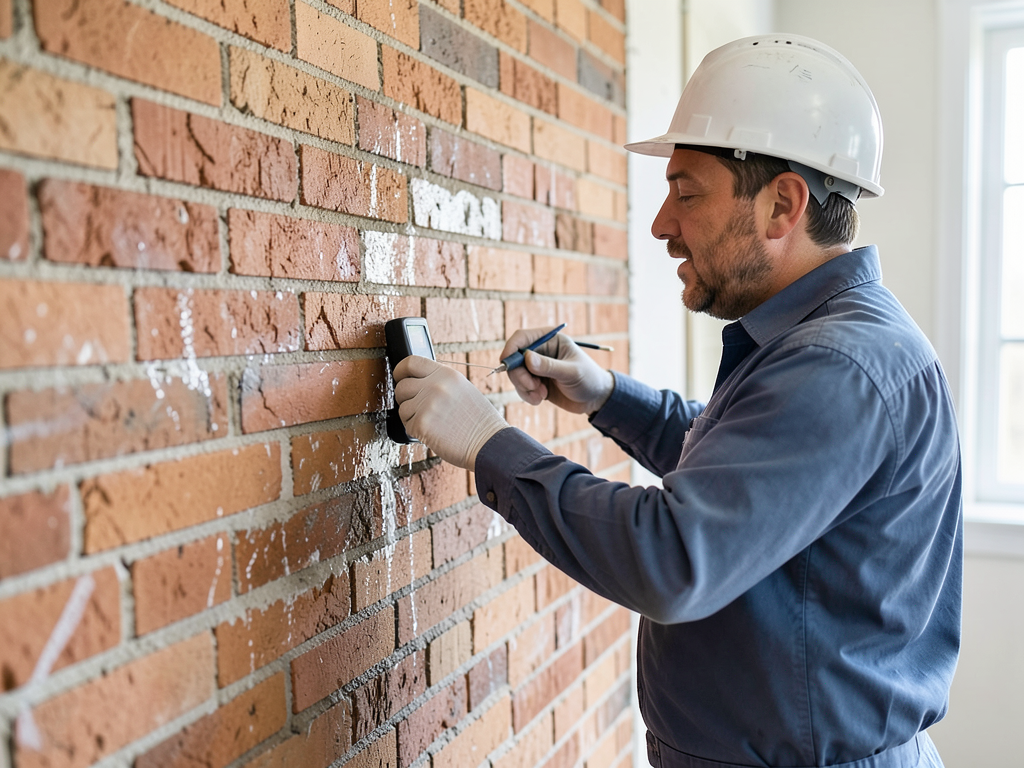
Technician using moisture meter to test brick wall for hidden water infiltration during renovation inspection
Diagnostic Testing Before Renovation
Professional moisture testing identifies existing problems before renovation begins. Infrared thermography reveals temperature differences that indicate moisture presence within walls. Areas showing cooler temperatures often contain hidden water that requires attention.
Electrical resistance moisture meters measure water content in brick and mortar. Readings above 20% indicate excessive moisture that must be addressed before proceeding with renovation work. These meters help identify specific problem areas requiring repair.
Calcium chloride tests measure vapor transmission rates through masonry. Results indicate whether existing walls can adequately manage moisture or require additional vapor barriers. This testing proves especially important for interior renovations that affect wall assemblies.
Renovation Best Practices
Remove and replace deteriorated mortar using appropriate materials. Match mortar composition to the original to maintain compatibility with existing brick. Modern cement mortars can damage older, softer bricks through differential expansion and moisture trapping.
Install proper drainage planes behind new work. Building paper or synthetic housewrap creates a moisture barrier that directs water to weep systems. This layer protects both the new renovation work and existing structure from water damage.
Seal all penetrations through masonry with compatible sealants. Use polyurethane or silicone sealants that maintain flexibility for thermal movement. Rigid sealants crack over time, creating new entry points for moisture.
Maintenance After Renovation
Regular inspection prevents small problems from becoming major damage. Check mortar joints annually for signs of deterioration. Look for efflorescence, the white salt deposits that indicate water movement through masonry. Address these issues promptly to prevent further damage.
Clean gutters and downspouts seasonally to ensure proper water drainage. Clogged systems force water to overflow and pool near foundations. This simple maintenance step prevents many moisture-related problems.
Monitor interior humidity levels, especially during winter when condensation risks increase. Use dehumidifiers in basements and crawl spaces to maintain relative humidity below 60%. This prevents moisture accumulation in wall cavities and promotes healthy indoor air quality.
When to Call Professionals
Visible water stains on interior walls indicate active moisture problems requiring immediate attention. Don’t wait for damage to worsen. Professional assessment can identify the source and recommend appropriate solutions.
Spalling brick, where the face flakes off, signals serious moisture damage. This condition worsens rapidly as more brick surface becomes exposed to weather. Professional repair prevents structural compromise and preserves the home’s integrity.
Mold growth on interior surfaces suggests moisture problems within wall cavities. This health hazard requires professional remediation and moisture source elimination. DIY approaches often fail to address underlying causes. Mold Remediation & Removal.
Call (614) 707-7505 today to schedule your inspection. Our team specializes in moisture management for historic Weinland Park homes and can help protect your renovation investment.
Cost Considerations
Moisture prevention costs vary based on home size and existing conditions. Basic flashing repairs might cost $500-1,500, while comprehensive moisture management systems for larger homes can range from $5,000-15,000.
Preventive measures typically cost less than repairs for water damage. Addressing moisture issues during renovation often proves more economical than emergency repairs after damage occurs. Factor moisture management into your renovation budget from the start.
Insurance may cover some moisture damage repairs if caused by sudden events like pipe bursts. However, gradual damage from poor moisture management typically falls outside coverage. Prevention remains the most cost-effective approach.
Before and after comparison showing successful moisture remediation in a Weinland Park brick home renovation
Local Resources and Support
Weinland Park residents can access several resources for moisture management guidance. The Weinland Park Civic Association provides neighborhood-specific information about common building issues and local contractors experienced with historic homes.
Ohio State University Extension offers publications on moisture management for Ohio’s climate conditions. Their research-based recommendations help homeowners make informed decisions about moisture prevention strategies.
Local building supply companies stock materials appropriate for Columbus’s climate and soil conditions. Staff can recommend products specifically suited to Weinland Park’s environmental challenges.
Frequently Asked Questions
How do I know if my brick home has moisture problems?
Look for efflorescence (white deposits), spalling brick, water stains on interior walls, or musty odors in basements. Professional moisture testing provides definitive answers about hidden problems.
Can I seal my brick to prevent moisture?
Yes, but use breathable water repellents rather than film-forming sealants. The right product allows vapor transmission while blocking liquid water. Professional application ensures proper coverage and longevity.
How often should I inspect my brick for moisture issues?
Inspect annually, preferably in spring after winter’s freeze-thaw cycles. Check after heavy storms and monitor for new signs of moisture problems throughout the year. Fixing storm and flood damage in Hilliard after heavy rains.
Will new windows solve my moisture problems?
New windows help if existing ones leak, but moisture issues often originate elsewhere. Proper flashing, drainage, and overall moisture management prove more effective than window replacement alone.
What’s the best time of year for moisture repairs?
Spring and fall offer ideal conditions for exterior moisture work. Avoid freezing temperatures for mortar work and extreme heat that affects material curing. Plan major projects during moderate weather.
Taking Action Against Moisture
Moisture buildup in Weinland Park brick renovations requires proactive management rather than reactive repairs. Understanding local climate impacts, using appropriate materials, and implementing proper drainage systems protects your investment and preserves your home’s historic character.
Don’t let moisture problems derail your renovation plans. Start with a professional assessment to identify existing issues and develop a comprehensive moisture management strategy. The right approach saves money and prevents the stress of emergency repairs.
Ready to protect your Weinland Park brick home? Call (614) 707-7505 today to schedule your moisture inspection. Our experienced team understands the unique challenges of Columbus brick homes and can help ensure your renovation succeeds without moisture-related setbacks.
Pick up the phone and call (614) 707-7505 before the next storm hits. Your home deserves professional moisture protection that lasts for decades. For more information, visit IICRC moisture assessment standards.
{
“@context”: “https://schema.org”,
“@type”: “BlogPosting”,
“headline”: “Preventing moisture buildup in Weinland Park brick renovations”,
“description”: “Expert moisture prevention for Weinland Park brick homes. Learn how Columbus freeze-thaw cycles and clay soil affect masonry. Call (614) 707-7505 for inspection.”,
“wordCount”: 1645,
“datePublished”: “2026-03-17T10:13:00.000Z”,
“dateModified”: “2026-03-17T10:13:00.000Z”,
“inLanguage”: “en-US”,
“mainEntityOfPage”: {
“@type”: “WebPage”,
“@id”: “https://fivestarwaterdamagerestorationcolumbus.com”
},
“publisher”: {
“@type”: “LocalBusiness”,
“name”: “Five Star Water Damage Restoration Columbus”,
“url”: “https://fivestarwaterdamagerestorationcolumbus.com”
},
“author”: {
“@type”: “Organization”,
“name”: “Five Star Water Damage Restoration Columbus”,
“url”: “https://fivestarwaterdamagerestorationcolumbus.com”
},
“image”: {
“@type”: “ImageObject”,
“url”: “https://fivestarwaterdamagerestorationcolumbus.com/wp-content/uploads/2026/03/preventing-moisture-buildup-in-weinland-park-brick-1.png”
}
}
{
“@context”: “https://schema.org”,
“@type”: “LocalBusiness”,
“name”: “Five Star Water Damage Restoration Columbus”,
“url”: “https://fivestarwaterdamagerestorationcolumbus.com”,
“address”: {
“@type”: “PostalAddress”,
“addressLocality”: “Columbus”
},
“areaServed”: {
“@type”: “City”,
“name”: “Columbus”
}
}
{
“@context”: “https://schema.org”,
“@type”: “FAQPage”,
“mainEntity”: [
{
“@type”: “Question”,
“name”: “How do I know if my brick home has moisture problems?”,
“acceptedAnswer”: {
“@type”: “Answer”,
“text”: “Look for efflorescence (white deposits), spalling brick, water stains on interior walls, or musty odors in basements. Professional moisture testing provides definitive answers about hidden problems.”
}
},
{
“@type”: “Question”,
“name”: “Can I seal my brick to prevent moisture?”,
“acceptedAnswer”: {
“@type”: “Answer”,
“text”: “Yes, but use breathable water repellents rather than film-forming sealants. The right product allows vapor transmission while blocking liquid water. Professional application ensures proper coverage and longevity.”
}
},
{
“@type”: “Question”,
“name”: “How often should I inspect my brick for moisture issues?”,
“acceptedAnswer”: {
“@type”: “Answer”,
“text”: “Inspect annually, preferably in spring after winter’s freeze-thaw cycles. Check after heavy storms and monitor for new signs of moisture problems throughout the year. Fixing storm and flood damage in Hilliard after heavy rains.”
}
},
{
“@type”: “Question”,
“name”: “Will new windows solve my moisture problems?”,
“acceptedAnswer”: {
“@type”: “Answer”,
“text”: “New windows help if existing ones leak, but moisture issues often originate elsewhere. Proper flashing, drainage, and overall moisture management prove more effective than window replacement alone.”
}
}
]
}
{
“@context”: “https://schema.org”,
“@type”: “BreadcrumbList”,
“itemListElement”: [
{
“@type”: “ListItem”,
“position”: 1,
“name”: “Home”,
“item”: “https://fivestarwaterdamagerestorationcolumbus.com”
},
{
“@type”: “ListItem”,
“position”: 2,
“name”: “Blog”,
“item”: “https://fivestarwaterdamagerestorationcolumbus.com/blog”
},
{
“@type”: “ListItem”,
“position”: 3,
“name”: “Preventing moisture buildup in Weinland Park brick renovations”
}
]
}
{
“@context”: “https://schema.org”,
“@type”: “Service”,
“serviceType”: “Water Damage Restoration”,
“provider”: {
“@type”: “LocalBusiness”,
“name”: “Five Star Water Damage Restoration Columbus”,
“url”: “https://fivestarwaterdamagerestorationcolumbus.com”
},
“areaServed”: {
“@type”: “City”,
“name”: “Columbus”
},
“description”: “Expert moisture prevention for Weinland Park brick homes. Learn how Columbus freeze-thaw cycles and clay soil affect masonry. Call (614) 707-7505 for inspection.”
}