Menu

Rapid Response Flood Extraction in Columbus – Crews Dispatched in Under 60 Minutes

When floodwater invades your property, every minute counts. Five Star Water Damage Restoration Columbus delivers rapid response flood extraction with certified technicians on-site fast, equipped with commercial-grade pumps and extraction systems to stop water damage before it destroys your home or business.

Slider Image 1
Slider Image 2
Slider Image 3
Slider Image 4
Slider Image 5
Slider Image 7
Slider Image 8
Slider Image 9
Slider Image 10
Slider Image 11

Columbus Flooding Demands Immediate Action

When the Scioto River crests or storm drains back up during heavy rain, Columbus properties face catastrophic flooding. You have a narrow window to prevent permanent damage. Standing water begins degrading drywall, warping hardwood floors, and saturating insulation within the first hour. By hour 24, mold spores activate. By 48 hours, structural damage becomes exponential.

Columbus sits in a floodplain with clay-heavy soil that prevents proper drainage. When water enters your basement or crawl space, it does not evaporate quickly. It pools, seeps, and spreads. The humidity we experience from late spring through early fall accelerates microbial growth. You cannot wait for morning. You cannot shop around for quotes.

Emergency water removal services require industrial truck-mounted extractors, not shop vacs. You need technicians trained in rapid water classification and contamination protocols. Sewage backups and river flooding introduce Category 3 water, which contains pathogens, chemicals, and biohazards. Standard cleaning methods spread contamination.

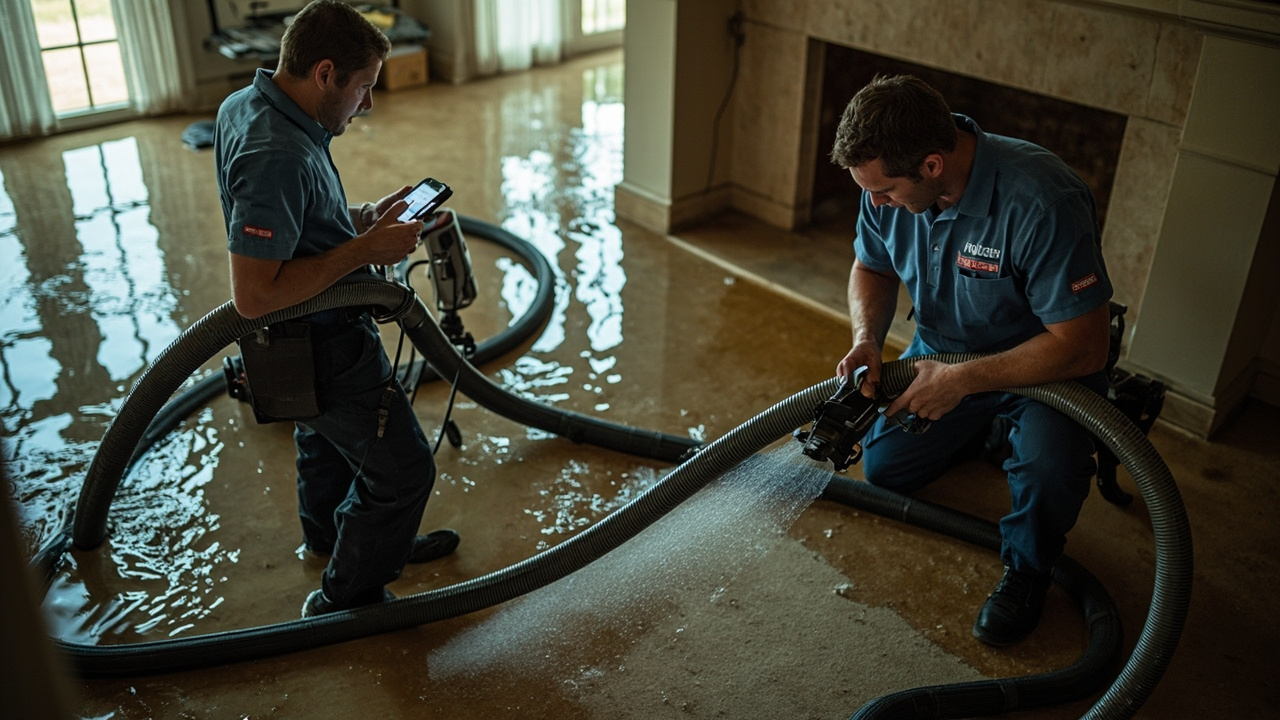
Five Star Water Damage Restoration Columbus operates 24/7 flood extraction units throughout Franklin County. Our dispatch system prioritizes urgent water cleanup based on severity and contamination level. We arrive with gas-powered submersible pumps capable of removing thousands of gallons per hour. Immediate flood pumping stops the spread. Emergency water damage extraction begins the moment our trucks pull up. Time is the difference between restoration and demolition.

Columbus Flooding Demands Immediate Action
How Emergency Flood Extraction Actually Works

How Emergency Flood Extraction Actually Works

Flood extraction is not about soaking up water with towels. It requires staged equipment deployment, strategic air movement, and real-time moisture mapping. We begin with source containment. If the water comes from a burst pipe, failed sump pump, or roof breach, we stop the inflow before extracting standing water. Pumping out a basement while water continues pouring in wastes time and exposes the property to additional damage.

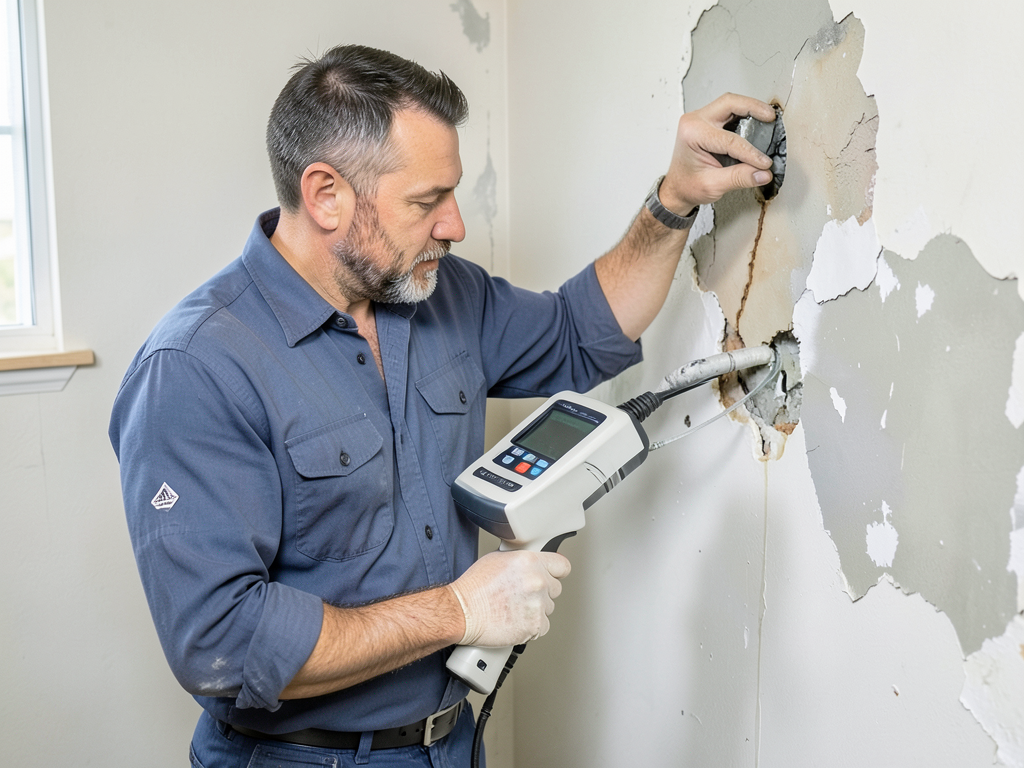
We deploy truck-mounted extractors first. These units generate vacuum suction exceeding 200 CFM (cubic feet per minute), pulling water from carpet padding, subfloors, and wall cavities. Portable extractors handle stairs, upper floors, and confined spaces. We use infrared moisture meters and thermal imaging cameras to detect hidden water pockets inside walls and under flooring. You cannot see saturation, but our equipment maps it in real time.

Air movers and commercial dehumidifiers follow extraction. We position low-grain refrigerant dehumidifiers to pull moisture from the air while directing airflow across wet surfaces. This prevents secondary water migration, where moisture wicks horizontally through drywall and insulation. In Columbus's humid climate, passive drying does not work. We force evaporation through controlled airflow and humidity reduction.

We document moisture levels at intake and recheck every 12 hours. Insurance companies require detailed moisture logs to approve claims. We photograph affected areas, record equipment placement, and track drying progress with calibrated hygrometers. You receive a full extraction report within 24 hours of service completion. This documentation protects you during the claims process and proves mitigation compliance.

What Happens When You Call for Emergency Flood Extraction

Rapid Response Flood Extraction in Columbus – Crews Dispatched in Under 60 Minutes
01

Dispatch and Site Assessment

The moment you call, our dispatch center logs your address, water source, and affected square footage. We send the nearest crew with appropriate equipment. Our technicians arrive with protective gear, moisture detection tools, and preliminary extraction units. They assess water category, identify contamination risks, and determine the safest extraction method. You receive a verbal action plan within five minutes of arrival. We start pumping immediately if the situation demands it.
02

Water Removal and Extraction

We position truck-mounted extractors near the water source and deploy submersible pumps for deep standing water. Hoses run directly to storm drains or designated discharge points. Technicians extract water from carpets, padding, and porous materials using wands and floor tools. We pull baseboards to access wall cavities and remove soaked insulation if necessary. High-velocity air movers begin drying exposed surfaces while extraction continues. This two-phase approach prevents re-saturation and accelerates mitigation.
03

Drying and Monitoring

Once bulk water is removed, we install dehumidifiers and air movers in a grid pattern to maximize evaporation. Technicians monitor ambient humidity, surface moisture, and airflow every 12 hours. We adjust equipment placement based on moisture readings. Drying typically takes 48 to 72 hours depending on material saturation and external humidity. We do not remove equipment until moisture levels match pre-loss conditions. You receive final documentation and clearance for reconstruction or contents restoration.

Why Columbus Property Owners Choose Five Star Water Damage Restoration

Columbus experiences flooding from multiple sources. The Scioto and Olentangy rivers overflow during spring thaw. Summer thunderstorms dump three inches of rain in under an hour. Aging sewer infrastructure backs up into basements during peak flow. Each scenario requires different extraction protocols. Five Star Water Damage Restoration Columbus trains specifically for local flood patterns and infrastructure vulnerabilities.

We maintain staging equipment in German Village, Clintonville, and Hilliard. This geographic distribution ensures rapid response across Franklin County. When flooding hits Old Oaks or Brewery District, we arrive before water spreads to adjacent rooms. Our technicians understand Columbus building construction, from post-war slab foundations to Victorian-era crawl spaces with limestone walls. Extraction methods vary based on structure type. Generic approaches cause secondary damage.

Our crews hold IICRC Water Restoration Technician certifications and complete annual floodwater training. We follow ANSI/IICRA S500 standards for water damage mitigation. Insurance adjusters recognize our documentation protocols, which speeds claim approvals. We coordinate directly with your carrier and provide detailed estimates before starting non-emergency work.

You receive real-time updates via text and email. We do not disappear after equipment placement. A project manager contacts you daily with moisture readings and drying progress. If reconstruction is needed, we connect you with licensed contractors who understand flood remediation sequencing. You do not juggle multiple vendors. We manage the process from extraction through final clearance, ensuring every step meets code and protects your investment.

What to Expect During Emergency Flood Extraction

Response Time and Availability

We dispatch crews 24 hours a day, 365 days a year. No answering services. No voicemail systems. A live technician answers your call and routes the nearest available unit. Average response time for Columbus properties is under 60 minutes during daylight hours and 90 minutes overnight. If severe weather delays travel, dispatch updates you with revised ETAs. We arrive with enough equipment to start extraction immediately. No return trips for forgotten tools or undersized pumps. Our trucks carry submersible pumps, truck-mounted extractors, air movers, dehumidifiers, and moisture detection equipment as standard loadout.

Initial Inspection and Contamination Assessment

Technicians inspect the water source and classify contamination level before touching anything. Clean water from supply lines receives Category 1 treatment. Gray water from appliances or storm runoff is Category 2. Black water from sewage backups or river flooding requires Category 3 protocols with full PPE and antimicrobial treatment. We test moisture levels in walls, subfloors, and adjacent rooms using penetrating and non-invasive meters. You receive a written scope of damage within the first hour. This document outlines affected materials, recommended actions, and estimated drying time. We do not upsell unnecessary services. If your carpet can be saved, we save it.

Extraction Quality and Completion Standards

We extract water until moisture levels drop below 15 percent for wood materials and 8 percent for concrete. These are industry thresholds for safe drying. Anything higher risks mold growth. Our equipment pulls water from carpet padding, subflooring, wall cavities, and insulation. We document before and after readings for every affected zone. Final clearance requires three consecutive readings within acceptable limits, taken 12 hours apart. You receive a certificate of drying completion with moisture maps and equipment logs. This documentation satisfies insurance requirements and protects you if issues emerge later. We do not declare a job finished based on visual inspection alone.

Post-Extraction Support and Claim Assistance

After extraction, we provide digital copies of all documentation, including photos, moisture logs, and equipment placement diagrams. If your insurance requires a third-party review, we coordinate with hygienists and adjusters. We do not charge for claim documentation or supplemental reporting. If reconstruction is necessary, we refer licensed contractors familiar with post-flood rebuild sequencing. You are not obligated to use our referrals. We simply ensure you understand the next steps. Our team remains available for questions during the rebuilding process. If new moisture issues appear during reconstruction, we return for re-inspection at no charge within 30 days of service completion.

Frequently Asked Questions

You Have Questions,
We Have Answers

What is the average insurance payout for water damage? +

Average insurance payouts for water damage in Columbus typically range from $2,500 to $15,000, depending on severity and your policy limits. Your payout depends on the damage source (burst pipe versus sewer backup), coverage type, deductible, and claim documentation. Sudden internal failures like broken water heaters usually receive full coverage, while gradual leaks or maintenance issues may get denied. Take photos immediately, document all damage, and call a certified restoration company before filing. Strong documentation increases your payout. Your adjuster needs proof of both damage extent and professional mitigation efforts to approve your full claim.

What is the immediate response to a flood? +

Stop the water source immediately if safe. Shut off your main water valve or call Columbus utilities for external flooding. Move to higher ground and avoid contact with floodwater, which carries sewage and chemicals. Turn off electricity at the breaker panel to prevent electrocution. Call a 24/7 emergency restoration team who can extract water within the first hour. Time is critical. Every minute allows mold spores to activate and structural wood to absorb more moisture. Do not wait for insurance approval. Document everything with photos, then get extraction crews working while you file your claim.

Who is the largest restoration company? +

Several national franchises operate in the restoration industry, including ServiceMaster and Servpro. While large companies offer brand recognition, local Columbus restoration companies often provide faster emergency response times and personalized service. National chains route calls through corporate centers, delaying dispatch. Local teams know Columbus neighborhoods, understand Scioto River flood patterns, and respond from nearby locations. During basement floods or burst pipes, you need boots on the ground in 60 minutes, not a call center transfer. Size matters less than response speed and local expertise when your home is flooding.

What services are offered by Rapid Response Grand Junction? +

This question references a company in Grand Junction, Colorado, not Columbus, Ohio. If you need rapid flood extraction in Columbus, contact local certified restoration companies who understand Ohio climate challenges like freeze-thaw pipe bursts and Scioto River flooding. Local Columbus teams offer 24/7 emergency water extraction, structural drying, mold prevention, sewage cleanup, and insurance claim assistance. They respond faster than out-of-state companies and know Franklin County building codes. During a flood emergency, call a local Columbus restoration team who can arrive within the hour, not a company 1,300 miles away.

Is it worth going through insurance for water damage? +

Yes, for major water damage over $5,000. Insurance exists for catastrophic losses like burst pipes flooding multiple rooms or sewage backups. Small claims under your deductible cost more in premium increases than paying out-of-pocket. In Columbus, a typical homeowner deductible runs $1,000 to $2,500. If your carpet pad replacement costs $1,800, skip the claim. If your finished basement needs full remediation at $18,000, file immediately. Multiple claims raise your rates or cause non-renewal. Always call a restoration company first for a damage assessment, then decide whether filing makes financial sense.

What is the 80% rule in homeowners insurance? +

The 80% rule means you must insure your home for at least 80% of its replacement cost to receive full claim payouts. If your Columbus home costs $300,000 to rebuild but you only carry $200,000 coverage, you are underinsured. Insurance will reduce your water damage payout proportionally. A $20,000 flood claim might only pay $13,333 because you failed the 80% threshold. Columbus home values have jumped significantly in recent years. Review your coverage annually. Many homeowners discovered underinsurance after flooding, receiving partial payouts that left them covering thousands in out-of-pocket remediation costs.

What does flood insurance cover? +

Flood insurance covers rising water from external sources like Scioto River overflow, Alum Creek flooding, or storm drainage failures. It pays for structural repairs, HVAC replacement, and flooring after flooding enters from outside. Standard homeowners policies exclude flood damage. You need separate NFIP or private flood coverage. Flood policies do not cover temporary housing, landscape damage, or finished basements in most cases. In Columbus, properties near Olentangy River or Big Walnut Creek need flood insurance. Coverage takes 30 days to activate after purchase. Buy before storm season starts, not when flood warnings issue.

What is the first thing you should do after a flood? +

Ensure your safety first. Turn off electricity at the breaker panel to prevent electrocution. Avoid standing water if power is on. Evacuate if water rises rapidly or contains sewage. Once safe, call a 24/7 Columbus emergency restoration company to start water extraction immediately. Take photos and video of all damage for insurance before water removal begins. Do not wait for adjuster approval to start mitigation. Insurance requires you to prevent further damage. Every hour of delay allows mold growth and structural deterioration. Professional extraction crews remove water, set up dehumidifiers, and document moisture levels for your claim.

Is it better to drive fast or slow through a flood? +

Do not drive through floodwater at any speed. Six inches of moving water can knock you off your feet. Twelve inches can move most cars. Two feet will float SUVs and trucks. Columbus flash floods turn familiar roads into fast-moving rivers within minutes. You cannot judge depth or road damage hidden underneath. Manhole covers lift off, creating sinkholes. One wrong turn can trap you in a submerged vehicle. Turn around and find alternate routes. If water reaches your door threshold, abandon the vehicle immediately and move to higher ground. Your life is worth more than risking a flooded engine.

Why Columbus Floodplain Geography Makes Rapid Response Critical

Columbus sits at the confluence of the Scioto and Olentangy rivers, with large portions of German Village, Franklinton, and the Brewery District located in FEMA-designated flood zones. The city's clay-heavy soil does not absorb water quickly, causing surface runoff to pool in basements and crawl spaces. When storms dump two to three inches of rain in under an hour, the combined sewer system overflows, sending contaminated water back into properties. Emergency water removal services must address not just volume but contamination level. Waiting even six hours allows black water pathogens to penetrate porous materials. Rapid response flood extraction prevents catastrophic loss in a geography that concentrates water rather than dispersing it.

Five Star Water Damage Restoration Columbus maintains relationships with Franklin County building inspectors, local plumbers, and insurance adjusters who understand regional flood risks. We follow Columbus building codes for post-flood reconstruction, including updated backflow preventer requirements and sump pump redundancy standards. Our technicians train on local infrastructure vulnerabilities, from aging terracotta sewer lines in Victorian Village to undersized storm drains in newer subdivisions. When you hire a local team, you get expertise shaped by Columbus-specific challenges. We do not apply generic flood protocols. We adapt our extraction methods to the soil composition, building age, and seasonal humidity patterns that define water damage response in Central Ohio.
Water Damage Restoration Services in The Columbus Area

We proudly serve the wider Columbus area and its surrounding communities. Our centrally located office allows our emergency response teams to reach your property quickly, no matter where you are. We are committed to being a reliable resource for our neighbors, and our responsive team is always on standby to provide professional assistance when you need it most. We believe that local expertise and a quick response are crucial when dealing with water damage, so we encourage you to view our service area to see if we can help.

Address:
Five Star Water Damage Restoration Columbus, 601 N High St, Columbus, OH, 43215

Additional Services We Offer

Our news updates

Latest Articles & News from The Blogs

Dealing with water damage when you live in a Columbus HOA or condo association Water damage in a Columbus condo…

Dealing with water damage when you live in a Columbus HOA or condo association

Dealing with water damage when you live in a Columbus HOA or condo association Water damage in a Columbus condo…

The real difference between common mildew and dangerous black mold in Eastmoor homes

The real difference between common mildew and dangerous black mold in Eastmoor homes Eastmoor homeowners often spot dark patches in…

Testing your sump pump before the spring rains hit the South Side

Testing your sump pump before the spring rains hit the South Side \n\n Heavy spring rains combined with the clay-rich…

Contact Us

Every minute floodwater remains in your property increases repair costs and health risks. Call Five Star Water Damage Restoration Columbus now at (614) 707-7505. Our crews are standing by with truck-mounted extractors and emergency pumping equipment. We dispatch immediately and arrive ready to stop the damage.