Menu

Visible Mold Growth on Walls in Columbus – Expert Diagnosis and Permanent Remediation

We identify the moisture source feeding your wall mold infestation, eliminate fungal growth on wall surfaces at the root, and prevent recurrence through professional containment and structural drying protocols designed for Columbus homes.

Slider Image 1
Slider Image 2
Slider Image 3
Slider Image 4
Slider Image 5
Slider Image 7
Slider Image 8
Slider Image 9
Slider Image 10
Slider Image 11

Why Columbus Homes Develop Black Mold Spots on Drywall

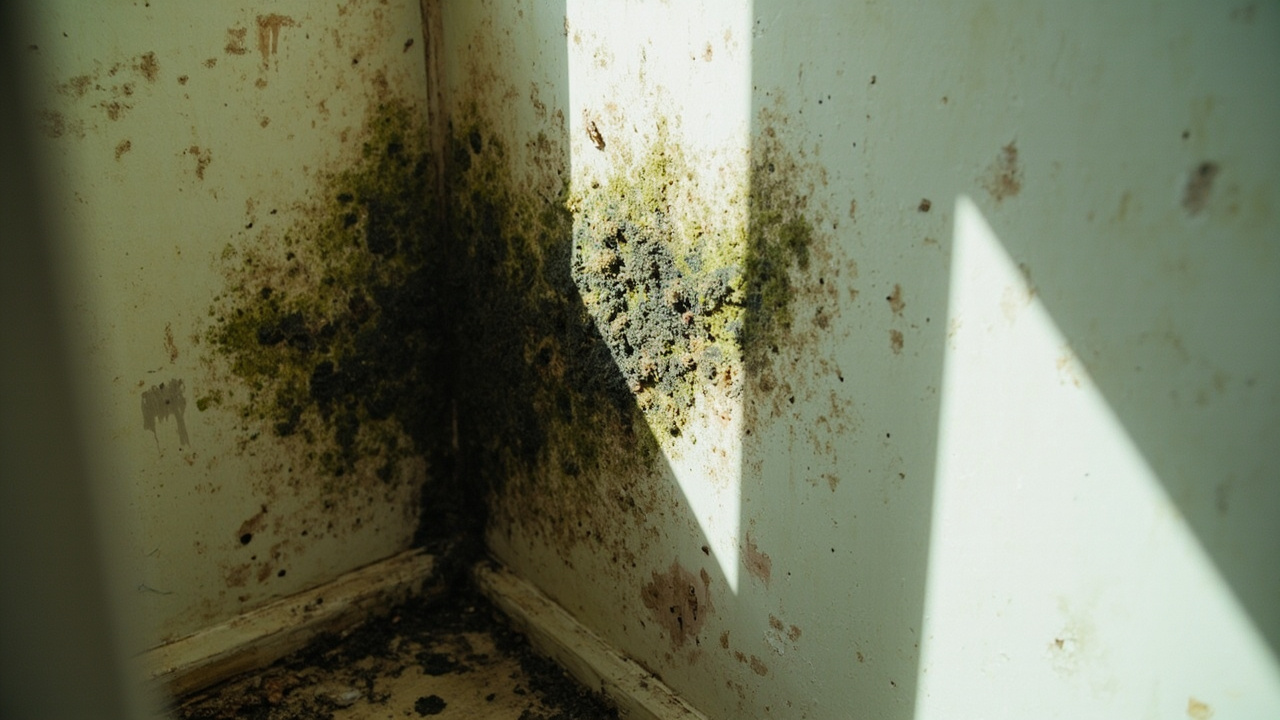
You walk past the same wall every day. Then you notice it. A dark smudge. A fuzzy patch. Black mold spots on drywall that were not there last month.

Columbus sits in a humid continental climate zone where summers push indoor humidity past 60 percent. Add poor attic ventilation, leaky roof flashing after spring storms, or a slow plumbing leak behind the wall, and you create the perfect breeding ground for visible mildew on painted walls.

Mold does not grow without moisture. If you see fungal growth on wall surfaces, water is present or was present long enough to compromise the drywall. The Scioto and Olentangy rivers create localized humidity pockets across neighborhoods like German Village and Clintonville. Older homes with plaster walls and inadequate vapor barriers trap moisture inside wall cavities. Newer builds in subdivisions like New Albany often suffer from construction moisture that was never fully dried before drywall installation.

The mold you see on the surface is just the visible portion. Mold patches on sheetrock indicate deeper colonization inside the wall cavity. The longer you wait, the more the infestation spreads through studs, insulation, and adjacent rooms.

Ignoring wall mold infestation does not make it disappear. It makes it worse. Spores multiply. Structural damage accelerates. Health risks increase, especially for children and anyone with respiratory conditions.

Why Columbus Homes Develop Black Mold Spots on Drywall
How We Stop Mold Growth and Eliminate the Source

How We Stop Mold Growth and Eliminate the Source

Surface cleaning does not work. Bleach and paint cover the problem temporarily, but mold regrows because the moisture source remains untouched.

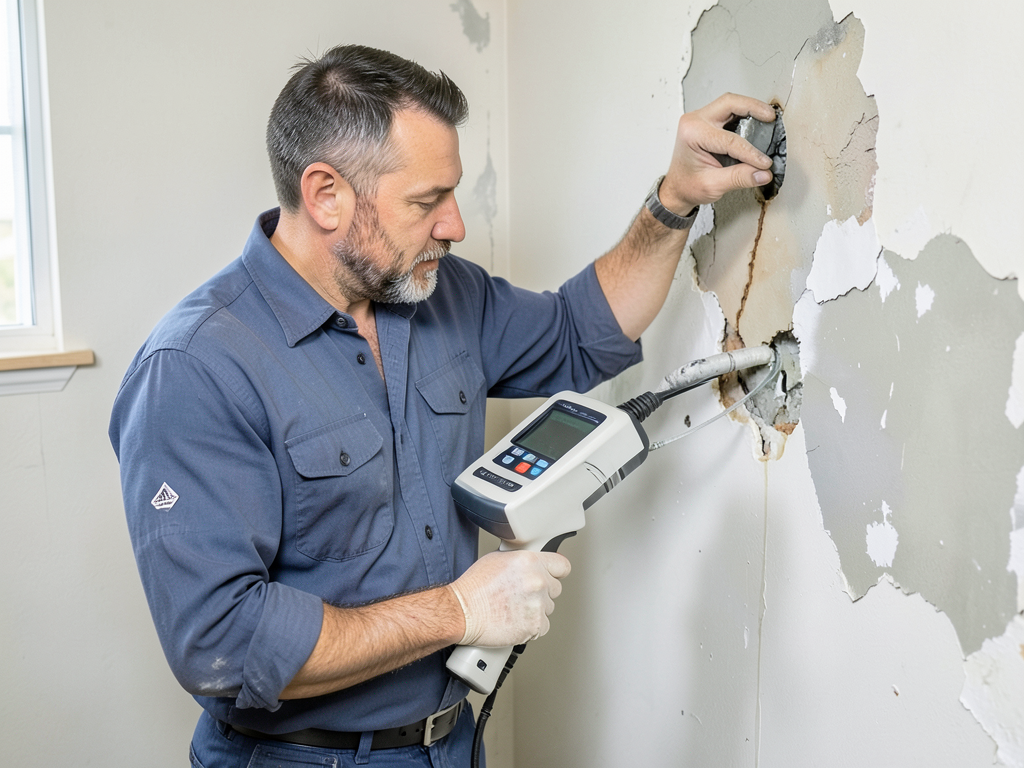
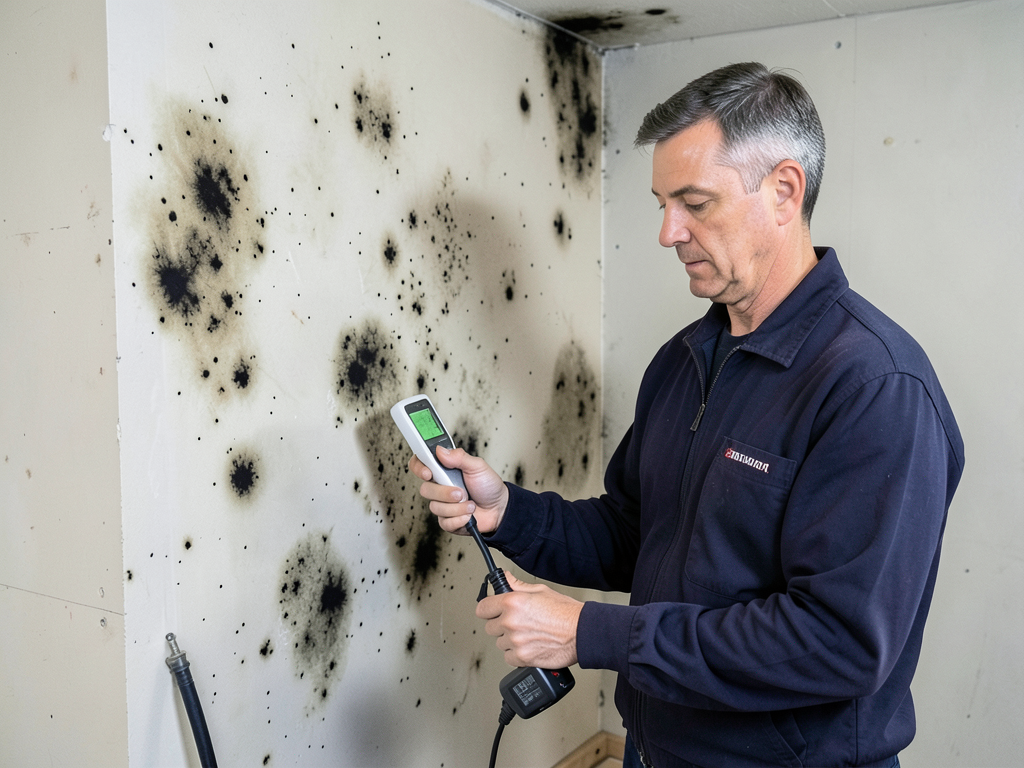
We start with moisture mapping using infrared thermal imaging and pin-type moisture meters. We scan the entire wall assembly to locate hidden water intrusion. A visible mold patch on one section of drywall often indicates a leak three feet away that has wicked through the stud bay.

Once we identify the moisture source, we address it. Roof leak. Condensation from an uninsulated cold water pipe. Exterior grading that directs rainwater toward the foundation. Leaking window flashing. HVAC condensate line failure. We fix the water problem first, or remediation is pointless.

Next, we establish containment using negative air pressure and HEPA filtration. This prevents cross-contamination to unaffected rooms. We remove compromised drywall and insulation, bag it, and dispose of it according to EPA guidelines. We do not sand mold or disturb it unnecessarily. That releases millions of spores into the air.

We treat remaining framing with antimicrobial solutions and verify material moisture content drops below 15 percent before reconstruction. We use commercial dehumidifiers and air movers to dry the wall cavity completely. Drying takes days, not hours.

Finally, we encapsulate treated surfaces with a mold-resistant primer and install new drywall. We do not skip steps. We do not rush the drying phase. We do not leave moisture behind.

What Happens During Mold Remediation

Visible Mold Growth on Walls in Columbus – Expert Diagnosis and Permanent Remediation
01

Inspection and Moisture Tracking

We conduct a full visual inspection and use thermal imaging to map moisture patterns behind walls. We measure humidity levels in the room and inside wall cavities using penetrating moisture meters. This diagnostic phase identifies the water source and the full extent of hidden mold colonization before we begin any physical work.
02

Containment and Removal

We seal off the affected area with plastic sheeting and establish negative air pressure using HEPA air scrubbers. We remove all contaminated drywall, insulation, and baseboards. Moldy materials are bagged immediately and removed from your home. We treat exposed framing with EPA-registered antimicrobial solutions to kill remaining spores and prevent regrowth during the drying phase.
03

Drying and Reconstruction

We place industrial dehumidifiers and air movers to dry the wall cavity completely. We monitor moisture levels daily until readings confirm the structure is dry. Only then do we encapsulate treated surfaces and install new drywall. We match textures, prime with mold-resistant coatings, and restore the wall to pre-loss condition with no visible evidence of prior contamination.

Why Columbus Homeowners Choose Five Star Water Damage Restoration

You need a team that understands how Columbus homes are built and why they fail.

We work in German Village row houses with shared brick walls and limited attic access. We remediate mold in Clintonville bungalows with crawl spaces that flood every spring. We handle Victorian homes in Victorian Village with original plaster walls and hidden pipe chases. We know the construction methods, the common failure points, and the right repair protocols for each.

We also understand local building codes and insurance claim procedures. Franklin County has specific requirements for mold remediation and disposal. We document every step with photos and moisture readings so your insurance adjuster has the evidence needed to approve your claim. We communicate directly with your carrier to expedite the process.

Five Star Water Damage Restoration Columbus operates with IICRC-certified technicians trained in water damage restoration and applied microbial remediation. We do not subcontract mold work to unqualified crews. We do not guess at moisture sources. We do not leave jobs half-finished.

We also respond fast. Mold grows exponentially after 48 hours. A small patch becomes a wall-wide infestation in less than a week. When you call us, we arrive the same day to assess the damage and begin containment. Speed matters, and we treat your home with the urgency it deserves.

You will not find vague timelines or surprise charges. We provide written estimates, clear scope definitions, and daily progress updates. You know what we are doing and why.

What You Can Expect From Start to Finish

Same-Day Response

We dispatch a certified technician within hours of your call. We conduct the initial inspection, moisture mapping, and containment setup the same day. Mold does not wait, and neither do we. You will have a written assessment and remediation plan before we leave. Most residential mold remediation projects are completed in three to five days, depending on the size of the affected area and drying time required.

Comprehensive Mold Assessment

We do not guess. We use calibrated moisture meters, infrared cameras, and visual inspection protocols to map the full scope of contamination. We identify the water source, measure airborne spore levels if needed, and determine whether mold has spread into HVAC ducts or adjacent rooms. You receive a detailed report with photos, moisture readings, and a clear remediation plan. No surprises. No hidden damage discovered halfway through the job.

Complete Structural Restoration

We do not stop at mold removal. We restore your wall to its original condition. That includes drywall replacement, texture matching, priming, and painting. We coordinate with licensed plumbers or roofers if the moisture source requires structural repair. You get a finished wall that looks like the problem never happened. No patched-over messes. No mismatched textures. Just a clean, dry, mold-free surface ready for use.

Post-Remediation Verification

After remediation is complete, we conduct a final moisture inspection to confirm the wall cavity is dry and no hidden moisture remains. We provide documentation showing pre- and post-remediation moisture levels. If you request third-party air quality testing, we coordinate with certified mold inspectors to verify clearance. We also offer guidance on humidity control, ventilation improvements, and preventive maintenance to reduce future mold risk in your Columbus home.

Frequently Asked Questions

You Have Questions,
We Have Answers

What to do if you see mold on a wall? +

Stop using the affected room immediately. Mold releases spores when disturbed. Do not try to clean it yourself if the area exceeds 10 square feet. Document the growth with photos for insurance purposes. Identify and stop the moisture source. Columbus homes often face mold from basement seepage, roof leaks, or HVAC condensation due to our humid summers. Call a certified mold remediation specialist to assess the extent. They will contain the area, remove contaminated materials, and treat surfaces with antimicrobial solutions. Professional remediation prevents cross-contamination and ensures complete removal.

Can mold make a baby cough? +

Yes. Mold spores can irritate a baby's developing respiratory system and trigger coughing, wheezing, or congestion. Infants are especially vulnerable because their immune systems are immature. Common household molds like Cladosporium and Aspergillus release allergens that inflame airways. If your baby coughs persistently without other illness signs, inspect your Columbus home for hidden mold in basements, crawl spaces, or around windows where condensation accumulates during winter. A pediatrician can evaluate symptoms while a mold professional identifies and removes the source. Never ignore respiratory symptoms in infants.

Can mold cause twitching? +

Mold exposure can cause neurological symptoms, including muscle twitching. Mycotoxins produced by certain molds like Stachybotrys (black mold) affect the nervous system when inhaled over time. Symptoms range from tremors and twitching to headaches and cognitive fog. Columbus homes with chronic moisture problems in crawl spaces or attics create environments where toxic molds thrive. If you experience unexplained twitching alongside visible mold growth, see a physician immediately. Document your symptoms and have your home professionally tested. Removing the mold source often resolves neurological symptoms, but medical evaluation is critical.

Does black mold affect pregnancy? +

Yes. Mold exposure during pregnancy poses risks to both mother and fetus. Pregnant women have altered immune responses, making them more susceptible to respiratory infections triggered by mold spores. Some mycotoxins can cross the placental barrier. Studies link mold exposure to increased asthma risk, preterm birth, and low birth weight. Columbus homes with basement moisture or inadequate ventilation create mold-friendly conditions. If you are pregnant and discover mold, leave remediation to professionals. Avoid the affected area entirely. Consult your obstetrician about potential exposure and arrange immediate mold testing and removal.

What kills mold permanently on walls? +

Nothing kills mold permanently if moisture remains. Surface treatments like bleach only address visible growth, not root systems inside porous materials like drywall or wood. Professional remediation uses HEPA vacuuming, antimicrobial treatments, and complete removal of contaminated materials. The key is controlling moisture. Columbus homes need proper grading, functioning gutters, basement waterproofing, and HVAC maintenance to prevent humidity above 60 percent. Fix leaks immediately. Use dehumidifiers in basements during humid months. Encapsulate crawl spaces. Without moisture control, mold will return regardless of cleaning methods. Address the cause, not just the symptom.

Will mold go away if it dries out? +

No. Mold does not die when it dries out. It becomes dormant and stops actively growing, but spores remain viable for years. When moisture returns, mold reactivates immediately. Dried mold is actually more dangerous because it becomes brittle and releases airborne spores easily when disturbed. Columbus experiences seasonal humidity swings, meaning dormant mold in your attic or basement can reactivate during summer. Visible mold indicates an existing moisture problem that will recur. You must remove the contaminated materials entirely and fix the moisture source. Drying alone solves nothing.

What are the first signs of mold sickness? +

Early mold sickness symptoms mimic allergies or colds. Watch for persistent nasal congestion, sneezing, itchy or watery eyes, dry cough, throat irritation, and skin rashes. You might notice symptoms worsen at home and improve when you leave. Headaches, fatigue, and difficulty concentrating are common. Some people develop wheezing or chest tightness. In Columbus homes, basements and crawl spaces often harbor hidden mold that circulates through HVAC systems. If multiple household members show similar symptoms without an infectious cause, suspect mold. Professional testing identifies the type and extent of contamination.

Can air purifiers remove mold spores? +

Air purifiers with true HEPA filters can trap mold spores from circulating air, reducing airborne concentrations temporarily. However, they do not eliminate the mold source. Purifiers cannot remove mold growing inside walls, under flooring, or in ductwork. They are a supplemental tool, not a solution. Columbus homes with visible mold growth need professional remediation to remove contaminated materials. Running an air purifier while mold actively grows is like bailing water from a sinking boat without plugging the hole. Address the source first, then use purifiers to maintain air quality during and after remediation.

How to test your house for mold? +

Professional mold testing provides accurate results. Inspectors use moisture meters to find hidden water intrusion, thermal imaging to detect temperature anomalies behind walls, and air sampling to measure spore concentrations. Surface sampling identifies mold types on visible growth. DIY test kits from hardware stores are unreliable and often produce false positives. In Columbus, focus testing on basements, crawl spaces, attics, and areas around plumbing. A certified inspector understands local construction methods and common moisture problems like foundation seepage from clay soil. Testing costs less than remediation and provides a remediation roadmap.

Is brain damage from mold reversible? +

It depends on exposure duration and severity. Mild cognitive symptoms like brain fog, memory problems, and concentration issues often improve after mold removal and medical treatment. However, prolonged exposure to mycotoxins can cause lasting neurological damage. Stachybotrys and other toxic molds produce compounds that cross the blood-brain barrier and trigger inflammation. Some patients experience partial recovery with detoxification protocols and neurological rehabilitation. Others face permanent deficits. Early intervention matters. If you suspect mold-related brain damage, see a neurologist immediately and arrange professional mold remediation. Document your Columbus home's condition for potential medical-legal claims.

How Columbus Humidity and Older Housing Stock Accelerate Wall Mold Growth

Columbus averages 75 percent relative humidity in summer months, and older neighborhoods like Franklinton, Italian Village, and Weinland Park contain thousands of homes built before 1950 with minimal or no vapor barriers in exterior walls. These homes were designed to breathe, but modern HVAC systems and air sealing upgrades trap moisture inside wall cavities where it condenses on cold surfaces. Add a slow roof leak or improperly vented bathroom exhaust, and black mold spots on drywall appear within weeks. The combination of high outdoor humidity, poor interior ventilation, and aging building envelopes makes Columbus homes particularly vulnerable to fungal growth on wall surfaces.

Five Star Water Damage Restoration Columbus has worked in every Columbus neighborhood and understands the specific challenges of local housing stock. We know how balloon-framed homes in German Village allow mold to spread vertically through open stud bays. We understand how slab-on-grade construction in suburban Hilliard and Dublin traps ground moisture under flooring and wicks into drywall. We are familiar with Franklin County building code requirements for mold remediation and disposal. Choosing a local team means you get someone who knows your home's construction type and the environmental factors that caused the problem in the first place.
Water Damage Restoration Services in The Columbus Area

We proudly serve the wider Columbus area and its surrounding communities. Our centrally located office allows our emergency response teams to reach your property quickly, no matter where you are. We are committed to being a reliable resource for our neighbors, and our responsive team is always on standby to provide professional assistance when you need it most. We believe that local expertise and a quick response are crucial when dealing with water damage, so we encourage you to view our service area to see if we can help.

Address:
Five Star Water Damage Restoration Columbus, 601 N High St, Columbus, OH, 43215

Additional Services We Offer

Our news updates

Latest Articles & News from The Blogs

Dealing with water damage when you live in a Columbus HOA or condo association Water damage in a Columbus condo…

Dealing with water damage when you live in a Columbus HOA or condo association

Dealing with water damage when you live in a Columbus HOA or condo association Water damage in a Columbus condo…

The real difference between common mildew and dangerous black mold in Eastmoor homes

The real difference between common mildew and dangerous black mold in Eastmoor homes Eastmoor homeowners often spot dark patches in…

Testing your sump pump before the spring rains hit the South Side

Testing your sump pump before the spring rains hit the South Side \n\n Heavy spring rains combined with the clay-rich…

Contact Us

Visible mold means hidden damage. Call Five Star Water Damage Restoration Columbus at (614) 707-7505 for same-day inspection and containment. We identify the moisture source, eliminate the mold, and restore your walls permanently.