
Water damage protocols for daycare centers and private schools in Greater Columbus
Water damage in educational facilities demands immediate action to protect children’s health and prevent costly classroom downtime. Our Columbus-based team follows strict protocols designed for daycare centers and private schools, combining rapid emergency response with compliance to Ohio Department of Health standards and IICRC S500 guidelines. EPA mold cleanup guidelines for schools.
When water emergencies strike Columbus schools, every minute counts. Whether it’s a burst pipe in a Bexley preschool or flooding in a Worthington elementary school gymnasium, our specialized protocols ensure safe, thorough restoration while maintaining strict health standards for young occupants. Professional water damage restoration for Short North shops and galleries.
24/7 emergency response for Columbus educational facilities
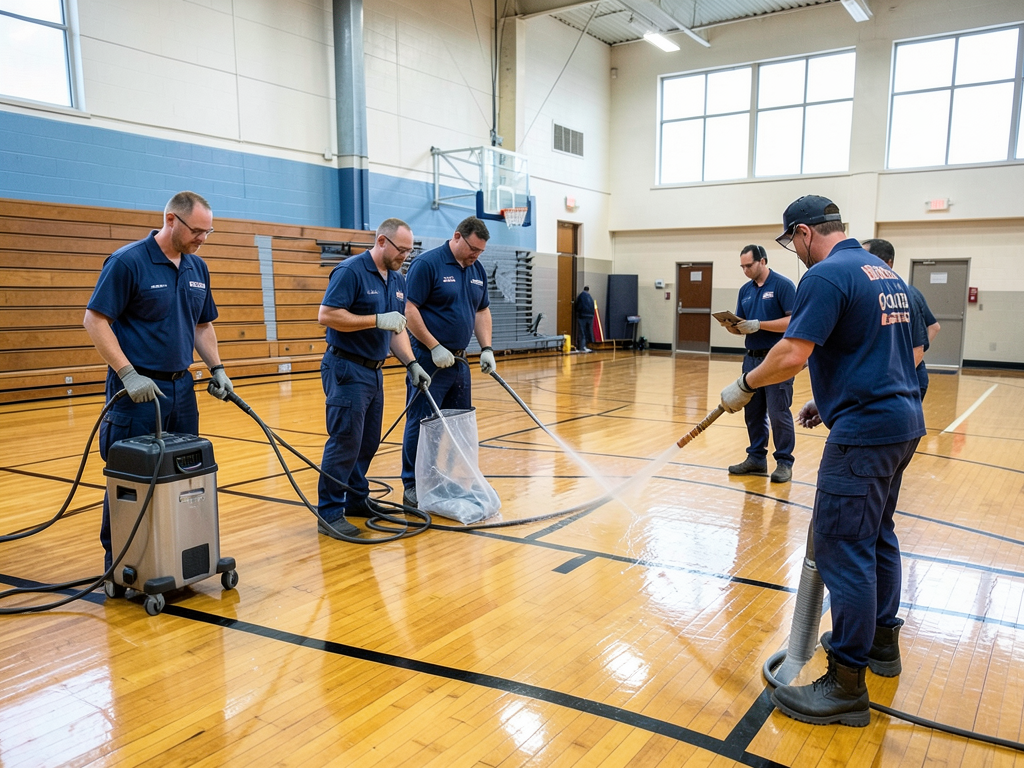
Our emergency dispatch center operates around the clock to serve Greater Columbus schools. When you call (614) 707-7505, our team mobilizes within 60 minutes, equipped with commercial-grade extraction units and moisture detection technology specifically calibrated for large educational spaces.
Columbus schools face unique challenges during water emergencies. The Ohio climate creates seasonal vulnerabilities – frozen pipes during polar vortex events can rupture in unheated utility rooms, while spring thunderstorms overwhelm aging drainage systems in older Clintonville school buildings. Our technicians understand these local patterns and arrive prepared with appropriate equipment. Fixing storm and flood damage in Hilliard after heavy rains.
Response time matters because Category 1 water can degrade to Category 2 within 24-48 hours, especially in the warm, humid conditions common in Columbus school buildings during summer months. We deploy thermal imaging cameras to identify hidden moisture in wall cavities and under flooring before mold colonization begins. Rapid Response Flood Extraction.
Specialized protocols for sensitive school environments
Educational facilities require different restoration approaches than standard commercial buildings. Our protocols address the specific needs of:
- Early childhood classrooms with soft surfaces and toys
- Science laboratories containing sensitive equipment
- Computer labs with expensive technology
- Gymnasiums with hardwood flooring systems
- Kitchens and cafeterias requiring food-safe sanitation
- Library collections with valuable books and media
For hardwood gymnasium floors common in Dublin and Upper Arlington schools, we use specialized drying systems that prevent cupping and buckling. These floors represent significant investments – a single basketball court can cost $50,000 or more to replace. Our technicians use penetrating moisture meters to monitor moisture content at multiple depths, ensuring complete drying without damaging the wood structure. What to do right now if your Dublin basement just flooded.
In early childhood environments, we employ HEPA filtration and antimicrobial treatments that are non-toxic and safe for children. All cleaning products meet EPA Safer Choice standards, and our technicians wear shoe covers and use containment barriers to prevent cross-contamination between affected and unaffected areas.
Health and safety compliance for Ohio schools

Ohio schools must comply with multiple regulatory frameworks during water damage restoration. We maintain current certifications with the IICRC and follow EPA guidelines for mold prevention in educational facilities. Our protocols exceed minimum requirements to ensure student safety. IICRC S500 water damage restoration standards.
The Ohio Department of Health requires specific documentation for water damage in schools, including moisture mapping reports and air quality testing results. We provide comprehensive documentation that satisfies school board requirements and insurance carriers. This includes before-and-after moisture readings, photographic documentation, and detailed drying logs.
For Category 3 water events (sewage backups or flooding from the Scioto River), we follow OSHA bloodborne pathogen protocols. This includes complete personal protective equipment for technicians, specialized disposal procedures, and verification testing to ensure all contaminants are eliminated before students return.
Indoor air quality monitoring is critical in schools. We use real-time particle counters to measure airborne contaminants during the drying process. Our goal is maintaining IAQ levels that meet or exceed pre-loss conditions, as poor air quality can trigger asthma and other respiratory issues in children.
Minimizing classroom downtime and learning disruption
Educational institutions cannot afford extended closures. Our restoration protocols prioritize rapid structural drying using commercial desiccant dehumidifiers and high-volume air movers. For a typical classroom water event, we can reduce drying time by 40-60% compared to conventional methods.
We work with school administrators to develop phased restoration plans. Critical areas like administrative offices and nurse’s stations receive priority treatment. For extensive damage, we can establish temporary classroom spaces using our portable containment systems, allowing learning to continue while restoration proceeds in affected areas.
Our documentation process includes detailed cost tracking and time-stamped progress reports. This transparency helps school boards and insurance adjusters understand the scope of work and approve necessary repairs quickly. We’ve helped Columbus schools navigate the claims process with major carriers, ensuring timely reimbursement for covered damages.
Preventing mold growth in high-occupancy buildings
Schools present unique mold risks due to high occupancy, frequent temperature fluctuations, and complex HVAC systems. Our prevention protocols include:
- Complete moisture mapping using thermal imaging and penetrating meters
- Strategic placement of commercial dehumidifiers to maintain 40-50% relative humidity
- Antimicrobial treatment of affected surfaces using EPA-registered products
- HEPA air scrubbing to remove airborne spores
- Final clearance testing by certified industrial hygienists
Columbus’s humid continental climate creates year-round mold challenges. Summer humidity levels often exceed 70%, providing ideal conditions for mold growth if moisture issues aren’t addressed promptly. Our dehumidification systems are sized based on cubic footage and moisture load, not just square footage, ensuring effective drying even in high-ceilinged gymnasiums and auditoriums.
We use moisture meters with extended probes to check wall cavities, under flooring, and in ceiling spaces where mold commonly develops unseen. This thorough approach prevents the recurrence that plagues many school restoration projects where surface drying appears complete but hidden moisture remains.
Navigating school board and insurance procurement processes
Educational institutions operate under strict procurement guidelines. We maintain pre-qualification with major insurance carriers and understand the documentation requirements for public and private schools. Our proposals include detailed scopes of work, material specifications, and compliance certifications.
For public schools in the Columbus City Schools district, we understand the competitive bidding process and can provide the documentation needed for emergency procurement waivers. We maintain all required insurance coverages, including pollution liability and workers’ compensation, and can provide certificates of insurance within 24 hours.
Our experience with school insurance claims includes working directly with adjusters to document damages, providing Xactimate estimates that insurance companies recognize, and coordinating with facility managers to minimize out-of-pocket expenses. We can often bill insurance companies directly, reducing administrative burden on school staff during crisis situations.
Commercial-grade equipment for institutional restoration
School water damage requires industrial-scale equipment not typically found in residential restoration. Our fleet includes:
- Trailer-mounted desiccant dehumidifiers producing 300+ pints per day
- Sub-surface extraction tools for hardwood flooring preservation
- High-volume air movers with CFM ratings exceeding 2,000
- Commercial-grade moisture detection systems with Bluetooth data logging
- Industrial air scrubbers with HEPA filtration rated at 99.97% efficiency
This equipment allows us to dry large spaces quickly while maintaining precise control over drying conditions. For example, in a 10,000 square foot school gymnasium, we can establish a contained drying chamber using polyethylene barriers and maintain specific temperature and humidity levels optimized for the building materials present.
Our moisture detection technology includes thermal imaging cameras that identify temperature variations indicating moisture presence, penetrating moisture meters that measure moisture content in wood and drywall to specific depths, and hygrometers that track atmospheric conditions throughout the restoration process.
Document and library drying services
Schools contain irreplaceable documents, student records, and library collections. Our document drying services use freeze-drying technology that can salvage water-damaged books, photographs, and paper documents. This process involves freezing materials and then using sublimation to remove moisture without causing additional damage.
For library collections, we establish containment areas with controlled temperature and humidity to prevent mold growth on books. Our technicians are trained in handling rare and valuable materials, using techniques developed by the Library of Congress for document salvage.
We maintain relationships with document restoration specialists who can handle extremely valuable or historically significant materials. This network ensures that Columbus schools have access to the highest level of document salvage expertise when needed.
Case study: Worthington elementary school water main break
In January 2026, a water main break at a Worthington elementary school flooded three wings overnight. Our team arrived within 45 minutes of notification, finding standing water in 15 classrooms, the library, and administrative offices. The school faced potential closure for weeks if not addressed immediately.
We deployed 12 commercial dehumidifiers and 30 air movers, establishing containment barriers to protect unaffected areas. Our team worked through the night, extracting water and beginning the drying process. By morning, classrooms were dry enough for teachers to salvage essential materials.
Using our commercial-grade equipment and protocols, we completed structural drying in 72 hours instead of the typical 5-7 days. Air quality testing confirmed safe conditions, and students returned to a clean, dry environment after a single snow day rather than an extended closure. The school district’s insurance carrier covered the full cost of restoration.
Pre-loss planning for educational institutions
We offer complimentary pre-loss planning services for Columbus schools. This includes developing emergency response protocols specific to your facility, identifying critical areas and valuable assets, and establishing priority contact information. Having a plan in place can reduce response time by 30-50% when emergencies occur.
Our planning process includes facility walkthroughs to identify potential vulnerabilities – aging plumbing in 1960s-era buildings, roof areas prone to ice dam formation, or basement spaces susceptible to groundwater infiltration. We document these findings and provide recommendations for preventive maintenance.
For schools in flood-prone areas near the Olentangy or Scioto rivers, we develop specific protocols for handling Category 3 water events, including establishing decontamination zones and coordinating with local health departments for clearance testing.
Frequently Asked Questions
How quickly should we respond to water damage in a school?
Emergency response should begin within 60 minutes of discovery. Water damage escalates rapidly – within 24-48 hours, clean water can support mold growth, especially in the warm conditions typical of school buildings.
Are your antimicrobial treatments safe for children?
Yes. We use only EPA-registered products that meet Safer Choice standards. All treatments are non-toxic when dry and safe for use in environments with children, including those with chemical sensitivities.
Will our insurance cover the restoration costs?
Most commercial property insurance policies cover sudden water damage from burst pipes, roof leaks, and similar events. We work with all major carriers and can help document damages to support your claim. Our Xactimate estimates are recognized by insurance adjusters nationwide.
How long will the restoration process take?
Timeline depends on damage extent, but our commercial-grade equipment typically reduces drying time by 40-60% compared to conventional methods. A typical classroom might be dry in 24-48 hours, while extensive damage to multiple areas could require 3-5 days.
Do you provide documentation for our school board?
Absolutely. We provide comprehensive documentation including moisture mapping reports, air quality test results, photographic documentation, and detailed drying logs. This satisfies Ohio Department of Health requirements and school board procurement processes.
Trust local experts with your school’s water damage emergency
Columbus schools deserve restoration partners who understand the unique challenges of educational environments. Our team combines technical expertise with sensitivity to the needs of students, staff, and administrators. We’re not just restoring buildings – we’re protecting learning environments and community institutions.
Don’t let water damage disrupt your school year. Call (614) 707-7505 today to schedule your inspection or activate our emergency response team. Our rapid response can mean the difference between a minor interruption and a major crisis for your educational facility.
For pre-loss planning services or to establish your school as a priority client, contact us at (614) 707-7505. We’ll help you develop protocols that protect your students and minimize disruption when water emergencies occur. For more information, visit CDC mold information and health effects.
{
“@context”: “https://schema.org”,
“@type”: “BlogPosting”,
“headline”: “Water damage protocols for daycare centers and private schools in Greater Columbus”,
“description”: “Expert water damage protocols for Columbus daycare centers and private schools. 24/7 emergency response, mold prevention, and compliance with Ohio health standards.”,
“wordCount”: 1958,
“datePublished”: “2026-05-20T10:42:00.000Z”,
“dateModified”: “2026-05-20T10:42:00.000Z”,
“inLanguage”: “en-US”,
“mainEntityOfPage”: {
“@type”: “WebPage”,
“@id”: “https://fivestarwaterdamagerestorationcolumbus.com”
},
“publisher”: {
“@type”: “LocalBusiness”,
“name”: “Five Star Water Damage Restoration Columbus”,
“url”: “https://fivestarwaterdamagerestorationcolumbus.com”
},
“author”: {
“@type”: “Organization”,
“name”: “Five Star Water Damage Restoration Columbus”,
“url”: “https://fivestarwaterdamagerestorationcolumbus.com”
},
“image”: {
“@type”: “ImageObject”,
“url”: “https://fivestarwaterdamagerestorationcolumbus.com/wp-content/uploads/2026/03/water-damage-protocols-for-daycare-centers-and-pri-1.png”
}
}
{
“@context”: “https://schema.org”,
“@type”: “LocalBusiness”,
“name”: “Five Star Water Damage Restoration Columbus”,
“url”: “https://fivestarwaterdamagerestorationcolumbus.com”,
“address”: {
“@type”: “PostalAddress”,
“addressLocality”: “Columbus”
},
“areaServed”: {
“@type”: “City”,
“name”: “Columbus”
}
}
{
“@context”: “https://schema.org”,
“@type”: “FAQPage”,
“mainEntity”: [
{
“@type”: “Question”,
“name”: “How quickly should we respond to water damage in a school?”,
“acceptedAnswer”: {
“@type”: “Answer”,
“text”: “Emergency response should begin within 60 minutes of discovery. Water damage escalates rapidly – within 24-48 hours, clean water can support mold growth, especially in the warm conditions typical of school buildings.”
}
},
{
“@type”: “Question”,
“name”: “Are your antimicrobial treatments safe for children?”,
“acceptedAnswer”: {
“@type”: “Answer”,
“text”: “Yes. We use only EPA-registered products that meet Safer Choice standards. All treatments are non-toxic when dry and safe for use in environments with children, including those with chemical sensitivities.”
}
},
{
“@type”: “Question”,
“name”: “Will our insurance cover the restoration costs?”,
“acceptedAnswer”: {
“@type”: “Answer”,
“text”: “Most commercial property insurance policies cover sudden water damage from burst pipes, roof leaks, and similar events. We work with all major carriers and can help document damages to support your claim. Our Xactimate estimates are recognized by insurance adjusters nationwide.”
}
},
{
“@type”: “Question”,
“name”: “How long will the restoration process take?”,
“acceptedAnswer”: {
“@type”: “Answer”,
“text”: “Timeline depends on damage extent, but our commercial-grade equipment typically reduces drying time by 40-60% compared to conventional methods. A typical classroom might be dry in 24-48 hours, while extensive damage to multiple areas could require 3-5 days.”
}
},
{
“@type”: “Question”,
“name”: “Do you provide documentation for our school board?”,
“acceptedAnswer”: {
“@type”: “Answer”,
“text”: “Absolutely. We provide comprehensive documentation including moisture mapping reports, air quality test results, photographic documentation, and detailed drying logs. This satisfies Ohio Department of Health requirements and school board procurement processes.”
}
}
]
}
{
“@context”: “https://schema.org”,
“@type”: “BreadcrumbList”,
“itemListElement”: [
{
“@type”: “ListItem”,
“position”: 1,
“name”: “Home”,
“item”: “https://fivestarwaterdamagerestorationcolumbus.com”
},
{
“@type”: “ListItem”,
“position”: 2,
“name”: “Blog”,
“item”: “https://fivestarwaterdamagerestorationcolumbus.com/blog”
},
{
“@type”: “ListItem”,
“position”: 3,
“name”: “Water damage protocols for daycare centers and private schools in Greater Columbus”
}
]
}
{
“@context”: “https://schema.org”,
“@type”: “Service”,
“serviceType”: “Water Damage Restoration”,
“provider”: {
“@type”: “LocalBusiness”,
“name”: “Five Star Water Damage Restoration Columbus”,
“url”: “https://fivestarwaterdamagerestorationcolumbus.com”
},
“areaServed”: {
“@type”: “City”,
“name”: “Columbus”
},
“description”: “Expert water damage protocols for Columbus daycare centers and private schools. 24/7 emergency response, mold prevention, and compliance with Ohio health standards.”
}