
Why a standard store-bought dehumidifier might not be enough for your damp Columbus basement
When your Columbus basement feels damp after a heavy rain or spring thaw, your first instinct might be to grab a standard store-bought dehumidifier. But here’s the truth: those $200 units from the big-box store often fail to address the real moisture problem lurking in your basement walls and foundation.
Columbus basements face unique challenges. Our region’s heavy clay soil creates hydrostatic pressure against foundation walls, forcing moisture through even the smallest cracks. Standard dehumidifiers simply can’t keep up with this constant moisture intrusion. They’re designed for maintaining comfort in already-dry spaces, not for structural drying after water exposure. Professional water damage restoration for Short North shops and galleries.
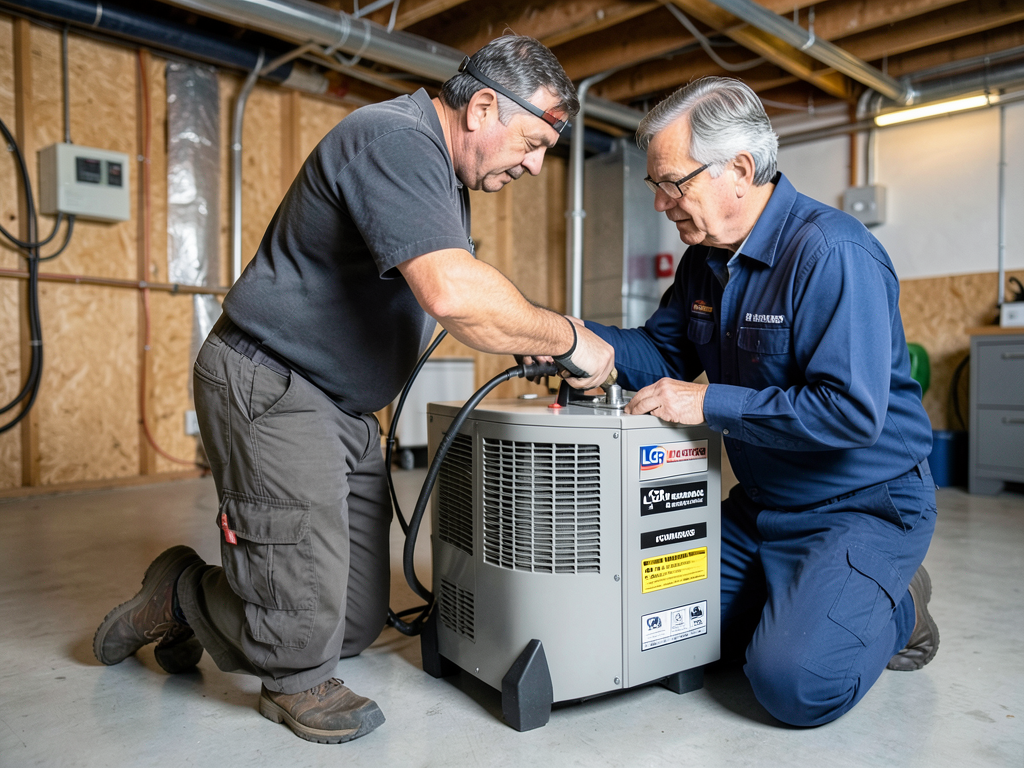
Professional restoration-grade equipment uses Low Grain Refrigerant (LGR) technology that can extract moisture from deep within structural materials. These units remove 150-200 pints per day compared to the 30-70 pints from residential models. More importantly, they maintain efficiency in the cool temperatures common in basements, where standard units often freeze up and stop working entirely.. Read more about Saving your home gym equipment and rubber flooring after a basement flood in Scioto Woods.
The science of structural drying requires specific air exchange rates and moisture removal capacity. Without proper equipment, you’re not just wasting money on electricity—you’re risking secondary damage. Mold can begin growing within 24-48 hours in damp conditions, and wood rot can compromise your home’s structural integrity before you even notice the problem.
Before you plug in that store-bought unit, understand what you’re really up against in your Columbus basement. The difference between a quick fix and proper restoration could save you thousands in future repairs. EPA Mold Information.
Standard vs. Professional Dehumidifiers: The Technical Gap
Understanding the technical differences between residential and professional dehumidifiers reveals why your basement needs industrial-grade equipment. The performance gap isn’t just about size—it’s about fundamental technology and capacity.
| Feature | Standard Residential | Professional Restoration |
|---|---|---|
| Pints Per Day (PPD) | 30-70 PPD at AHAM | 150-200+ PPD at AHAM |
| Cubic Feet per Minute (CFM) | 150-250 CFM | 400-700+ CFM |
| Operating Temperature Range | 65-95°F | 33-110°F |
| Moisture Removal Technology | Conventional Refrigerant | Low Grain Refrigerant (LGR) |
| Automatic Pump-Out | Manual bucket only | Continuous pump-out system |
The AHAM (Association of Home Appliance Manufacturers) rating shows how these units perform under ideal conditions. But real-world basement conditions in Columbus often fall outside those ideal parameters. Our clay-heavy soil and frequent freeze-thaw cycles create moisture challenges that standard units weren’t designed to handle.
Professional LGR units use a double cooling system that pre-cools incoming air before it hits the main coils. This allows them to extract moisture even when air temperatures drop below 60°F—common in Columbus basements year-round. Standard units simply can’t function efficiently in these conditions.
Airflow capacity makes another critical difference. A residential unit might treat 1,000 cubic feet of space effectively. But a typical Columbus basement ranges from 1,500 to 3,000+ cubic feet. Professional units provide the air exchange rates needed to reach moisture trapped behind walls and under flooring.. Read more about Complete Crawl Space Water Removal and Encapsulation for Brooksedge Homeowners.
Why Your Store-Bought Unit Fails in Columbus Conditions
Columbus’s unique climate and geology create moisture problems that overwhelm standard dehumidifiers. Understanding these local factors explains why your basement stays damp despite running a residential unit 24/7.
Our region’s clay soil expands when wet and contracts when dry. This constant movement creates pressure against foundation walls, forcing moisture through hairline cracks. Standard dehumidifiers can’t keep pace with this continuous moisture influx. They’re designed for static humidity levels, not the dynamic pressure from surrounding soil.
Columbus experiences dramatic seasonal temperature swings. Winter freeze-thaw cycles cause foundation expansion and contraction. When temperatures fluctuate rapidly, moisture that was frozen in walls suddenly becomes liquid water. Standard units struggle to respond to these sudden moisture releases because they lack the capacity and temperature range of professional equipment. Frozen pipe cleanup and repair in Gahanna before the damage spreads.
Many Columbus homes, especially in historic neighborhoods like German Village and Clintonville, feature older construction methods. These homes often have porous masonry foundations or inadequate waterproofing. Standard dehumidifiers can’t address moisture migrating through these materials—they only treat air already in the space.
Power limitations create another problem. Residential units typically run on standard 15-amp circuits. When you try to run multiple units for adequate coverage, you risk tripping breakers or creating fire hazards. Professional restoration equipment uses dedicated circuits and power management systems designed for continuous operation.
The noise factor also matters. Standard units run at 50-65 decibels—similar to normal conversation. But to achieve proper drying in a large basement, you’d need multiple units running constantly. The cumulative noise becomes unbearable. Professional units are engineered for quiet operation during extended use.
The Science of Structural Drying: Why Professionals Succeed
Professional water damage restoration follows specific scientific principles that go far beyond simple dehumidification. Understanding psychrometry—the study of air and moisture properties—reveals why DIY approaches often fail.
Structural drying requires achieving specific moisture content levels in different materials. Wood studs should reach 12-16% moisture content, while concrete should drop below 4% for proper drying. Standard dehumidifiers can’t measure or target these specific thresholds. They simply remove air moisture until a relative humidity sensor triggers shutoff.
Professional restoration uses moisture meters and thermal imaging to identify hidden moisture pockets. Water can travel laterally through walls or wick upward through materials via capillary action. Standard units can’t detect or address these hidden moisture sources. They only treat visible dampness in the air.
The IICRC S500 Standard for Professional Water Damage Restoration outlines specific drying procedures based on material type, water category, and environmental conditions. This standard requires monitoring specific metrics like specific humidity, vapor pressure, and moisture content readings. Store-bought units lack the sensors and data logging capabilities needed for this level of monitoring. IICRC S500 Standard.
Professional drying also considers air exchange rates and airflow patterns. Proper drying requires creating specific air movement patterns to ensure moisture evaporates from all surfaces. Standard units provide localized air treatment but can’t create the systematic airflow patterns needed for complete structural drying.
Temperature control plays a crucial role in efficient drying. Warmer air holds more moisture, so raising ambient temperature speeds the drying process. Professional restoration setups often include indirect-fired furnaces or specialized heating equipment. Standard dehumidifiers can’t control or optimize temperature for maximum moisture removal.
Columbus Basement Construction: Hidden Moisture Challenges
Columbus’s architectural history creates unique moisture challenges that standard dehumidifiers can’t address. Understanding your home’s construction helps explain why DIY drying often fails.
Many homes in neighborhoods like Bexley and Upper Arlington were built before modern waterproofing standards existed. These homes often feature limestone or brick foundations that are naturally porous. Moisture migrates through these materials continuously, creating a persistent dampness that overwhelms standard dehumidifiers.
Columbus’s freeze-thaw cycles cause foundation movement that standard construction can’t accommodate. Small cracks form seasonally, allowing groundwater intrusion. Standard dehumidifiers can’t prevent or address this ongoing structural moisture source. They only treat symptoms, not the underlying cause.
Many Columbus basements feature finished walls with fiberglass insulation. When these materials get wet, they trap moisture against structural elements. Standard dehumidifiers can’t penetrate these finished surfaces to reach the moisture within wall cavities. Professional restoration uses specialized equipment to create air movement within wall spaces.
The city’s combined sewer system, common in older neighborhoods, can back up during heavy rains. This creates not just moisture but contamination issues that require specialized handling. Standard dehumidifiers aren’t designed for Category 2 or 3 water scenarios and can actually spread contamination if used improperly.
Columbus’s high water table in certain areas, particularly near the Scioto River and Olentangy River corridors, creates constant hydrostatic pressure against foundations. This pressure forces moisture through basement floors and walls continuously. Standard units can’t overcome this geological moisture source.
Secondary Damage: The Hidden Cost of DIY Drying
Using inadequate equipment doesn’t just fail to solve your moisture problem—it often creates additional damage that costs far more to repair than professional restoration would have initially.
Mold growth represents the most immediate secondary damage risk. Mold spores begin colonizing damp materials within 24-48 hours. Standard dehumidifiers often take days to show any effect, by which time mold colonies are already established. Professional restoration equipment can reduce moisture levels below mold growth thresholds within hours.
Wood rot develops when moisture content in structural lumber exceeds 20% for extended periods. Standard dehumidifiers might eventually reduce ambient humidity, but they can’t extract moisture already absorbed into wood fibers. Professional LGR units can reduce wood moisture content to safe levels before rot begins.
Metal corrosion accelerates in damp environments. Your home’s electrical systems, HVAC components, and plumbing fixtures can all suffer corrosion damage from prolonged moisture exposure. Standard dehumidifiers might eventually reduce air moisture, but they can’t prevent the initial corrosion that occurs during the extended drying period.
Structural weakening occurs when moisture compromises load-bearing elements. Floor joists, support beams, and foundation walls can all lose structural integrity when exposed to sustained moisture. Standard dehumidifiers often can’t prevent this damage because they can’t achieve the moisture reduction rates needed to preserve structural strength.
Indoor air quality deteriorates in damp environments. Musty odors, increased allergens, and potential toxin release from mold growth all affect your family’s health. Standard dehumidifiers might eventually reduce some symptoms, but they can’t address the air quality issues that develop during the extended drying period.
Professional Restoration: The Columbus Advantage
Professional water damage restoration in Columbus offers advantages that go beyond equipment specifications. Local expertise and rapid response capabilities make the difference between salvage and replacement.
Columbus restoration professionals understand local building patterns and common failure points. They know which neighborhoods face specific challenges—whether it’s the clay soil in Westerville, the combined sewer issues in German Village, or the high water table near the river corridors. This local knowledge guides effective restoration strategies. Reliable help for Westerville homeowners dealing with a failed sump pump.
Rapid response capability is crucial in water damage scenarios. Professional restoration teams can typically arrive within 60 minutes of your call. This speed is critical because every hour of delay increases secondary damage risk. Store-bought solutions require you to discover the problem, purchase equipment, and set it up—often taking 24+ hours.
Professional restoration includes comprehensive moisture mapping using thermal imaging and moisture meters. This diagnostic process identifies all affected areas, including those hidden behind walls or under flooring. Standard dehumidifiers can’t provide this level of assessment, often missing critical moisture sources.
Insurance coordination represents another professional advantage. Restoration companies work directly with insurance providers, documenting damage and restoration progress with industry-standard reporting. This documentation often determines whether your claim is approved and for how much. DIY approaches leave you handling this complex process alone.
Professional restoration includes antimicrobial treatments and mold prevention strategies. These treatments are applied based on specific moisture levels and material types. Standard dehumidifiers can’t provide this level of protection against future mold growth.
The cost comparison often surprises homeowners. While professional restoration requires upfront investment, it frequently costs less than the combined expenses of failed DIY attempts, secondary damage repairs, and potential health issues from inadequate moisture control.
Cost-Benefit Analysis: Professional vs. DIY Drying
Comparing the true costs of professional restoration versus DIY drying reveals why the initial investment in professional services often saves money long-term.
Professional restoration equipment represents a significant capital investment—typically $5,000-$20,000 per truck for comprehensive drying setups. Individual homeowners can’t justify this expense for occasional use. However, restoration companies amortize this cost across multiple jobs, making professional-grade equipment economically viable for them.
Time costs factor heavily in the comparison. Professional teams can typically complete structural drying in 3-5 days. DIY approaches often take 7-14 days or longer, during which your home remains compromised and your daily life disrupted. The value of your time and the cost of extended disruption often exceed professional service fees.
Secondary damage costs can dwarf initial restoration expenses. Mold remediation typically costs $2,000-$6,000 for a single room. Wood replacement for structural elements can exceed $10,000. These costs are largely preventable with proper initial restoration but become inevitable with inadequate DIY approaches. Mold Remediation & Removal.
Health costs represent another consideration. Mold exposure can trigger respiratory issues, allergic reactions, and other health problems. The medical costs and lost productivity from these issues often exceed professional restoration costs. Standard dehumidifiers can’t prevent the health risks that develop during extended moisture exposure.
Property value impacts matter for long-term cost analysis. Unresolved moisture issues can reduce home values by 5-15% and complicate future sales. Professional restoration documentation helps maintain property value by proving proper mitigation was completed. DIY approaches leave uncertainty about whether problems were truly resolved.
Insurance considerations affect the financial equation. Many policies require professional restoration to maintain coverage validity. DIY approaches might void coverage for certain types of damage. Additionally, insurance companies often prefer working with established restoration companies they trust, potentially simplifying claims processes.
When to Call a Professional: Warning Signs
Understanding when DIY approaches become dangerous helps you make informed decisions about when to call professionals. Certain warning signs indicate that standard dehumidifiers won’t solve your problem.
Visible water accumulation represents an immediate professional need. If you see standing water, regardless of depth, standard dehumidifiers can’t address this situation. Water removal requires specialized extraction equipment before any drying can begin.
Musty odors indicate active mold growth. By the time you smell mustiness, mold colonies are already established. Standard dehumidifiers can’t eliminate existing mold growth—they only address moisture that allows it to continue spreading.
Discoloration on walls, ceilings, or floors suggests moisture has already compromised materials. Yellowing, staining, or warping indicates structural damage that requires professional assessment. Standard dehumidifiers can’t reverse material damage already in progress.
Health symptoms among household members—coughing, sneezing, headaches, or allergy-like symptoms—suggest mold or other biological growth. These symptoms indicate contamination levels that exceed what standard dehumidifiers can address safely.. Read more about Selling your house in Whitehall after it had water damage (and what you have to disclose).
Electrical issues in affected areas create immediate safety hazards. Water and electricity don’t mix, and DIY drying in areas with electrical problems creates shock and fire risks. Professional restoration includes proper electrical safety assessment and isolation.
Time factors matter significantly. If moisture has been present for more than 24-48 hours, secondary damage is likely already occurring. Standard dehumidifiers take too long to become effective in these scenarios. Professional equipment can address established moisture problems more rapidly.
Size considerations affect equipment effectiveness. If your affected area exceeds 1,000 square feet, standard dehumidifiers lack the capacity for adequate coverage. Professional restoration uses multiple units strategically placed for comprehensive coverage.
Professional Restoration Process: What to Expect
Understanding the professional restoration process helps you know what to expect and why each step matters. This knowledge also helps you evaluate whether a restoration company is following proper procedures.
Initial assessment begins with comprehensive moisture mapping using thermal imaging and moisture meters. Technicians identify all affected areas, including hidden moisture pockets. This assessment typically takes 1-2 hours but guides the entire restoration strategy.
Water classification determines the restoration approach. Category 1 water (clean sources) requires different handling than Category 3 water (contaminated sources). This classification affects equipment selection, antimicrobial treatments, and safety protocols.
Extraction removes standing water using specialized pumps and vacuums. This step must occur before drying can begin effectively. Professional extraction removes water at rates of hundreds of gallons per hour—far beyond what household wet vacuums can achieve.
Demolition of unsalvageable materials prevents secondary damage spread. This might include removing wet carpet, damaged drywall, or compromised insulation. Professional restoration makes these decisions based on moisture content readings and material salvageability.
Drying setup involves strategic equipment placement for optimal airflow patterns. Professional restorers use psychrometric calculations to determine exact equipment requirements for your specific situation. This isn’t guesswork—it’s science-based planning.
Monitoring continues throughout the drying process. Technicians take moisture readings daily and adjust equipment as needed. This monitoring ensures drying progresses efficiently and completely. Standard dehumidifiers lack the monitoring capabilities for this level of oversight.
Final verification confirms all materials have returned to acceptable moisture levels. This verification includes documentation suitable for insurance purposes. Without this documentation, you can’t prove the restoration was completed properly.
Local Resources and Next Steps
Columbus homeowners have access to excellent professional restoration resources. Understanding your options helps you make informed decisions when water damage occurs.
Local restoration companies understand Columbus-specific challenges. They know which neighborhoods face particular risks and have relationships with local insurance providers. This local expertise often translates to faster response times and more effective restoration strategies.
Emergency response services operate 24/7 in the Columbus area. When water damage occurs, waiting until morning often increases damage severity. Professional restoration teams can respond immediately, regardless of when disaster strikes.
Insurance considerations affect your restoration choices. Many Columbus restoration companies work directly with insurance providers, handling paperwork and documentation. This coordination often simplifies the claims process and ensures proper coverage utilization.
Preventive measures can reduce future water damage risks. Professional assessments can identify vulnerabilities in your home’s moisture management systems. These assessments often reveal issues that standard home inspections miss.
Community resources provide additional support. Local building departments, neighborhood associations, and utility companies often offer information about water management and damage prevention specific to Columbus conditions.
Documentation requirements vary by insurance provider and damage type. Professional restoration companies understand these requirements and ensure proper documentation for maximum coverage. DIY approaches often result in incomplete documentation that reduces claim success.
Health and safety considerations extend beyond immediate water damage. Professional restoration includes assessment for potential long-term health impacts from moisture exposure. This assessment helps ensure your home remains safe after restoration completes.
Frequently Asked Questions
How long does professional basement drying take in Columbus?
Professional basement drying typically takes 3-5 days in Columbus, depending on the extent of moisture, materials affected, and local conditions. Standard dehumidifiers often require 7-14 days or longer, during which secondary damage can occur.
Will my insurance cover professional water damage restoration?
Most homeowners insurance policies cover sudden, accidental water damage from sources like burst pipes or appliance failures. However, coverage varies significantly by policy and damage cause. Professional restoration companies can help verify your coverage and handle insurance documentation.
Can I use my existing dehumidifier alongside professional equipment?
While additional dehumidification won’t harm the process, standard dehumidifiers are often ineffective when professional-grade equipment is operating. Professional setups are designed to handle the entire moisture load, and additional units typically don’t improve results significantly.
What makes Columbus basements more susceptible to moisture problems?
Columbus’s clay soil, freeze-thaw cycles, and combined sewer systems in older neighborhoods create unique moisture challenges. Our region’s high water table near river corridors and seasonal precipitation patterns also contribute to persistent basement moisture issues.
How do I know if my basement has hidden moisture damage?
Hidden moisture often manifests as musty odors, unexplained allergy symptoms, or minor wall discoloration. Professional moisture meters and thermal imaging can detect moisture behind walls and under flooring that isn’t visible to the naked eye.
Is professional restoration worth the cost compared to DIY approaches?
Professional restoration typically costs more upfront but often saves money long-term by preventing secondary damage, reducing restoration time, and ensuring proper documentation for insurance claims. The health and safety benefits also justify the investment for most homeowners.
Take Action Before Secondary Damage Occurs
Water damage doesn’t wait for convenient timing, and neither should your response. Every hour of delay increases the risk of mold growth, structural damage, and escalating repair costs. Standard dehumidifiers simply can’t address the complex moisture challenges that Columbus basements face.
Professional restoration equipment and expertise make the difference between salvage and replacement. Our local teams understand Columbus-specific moisture challenges and can respond rapidly to prevent secondary damage. We use industrial-grade equipment that achieves results in days rather than weeks.
Don’t let inadequate equipment turn a manageable problem into a major reconstruction project. The cost of professional restoration is often far less than the combined expenses of failed DIY attempts, secondary damage repairs, and potential health issues from prolonged moisture exposure.
Call (614) 707-7505 today to schedule your inspection. Our team is ready to respond 24/7 to protect your home and your family’s health. The longer you wait, the more extensive—and expensive—the damage becomes.
Pick up the phone and call (614) 707-7505 before the next storm hits. Your basement’s moisture problem won’t solve itself, but professional restoration can address it completely before secondary damage takes hold. Fixing storm and flood damage in Hilliard after heavy rains.
{
“@context”: “https://schema.org”,
“@type”: “BlogPosting”,
“headline”: “Why a standard store-bought dehumidifier might not be enough for your damp Columbus basement”,
“description”: “Discover why standard dehumidifiers fail in Columbus basements and how professional-grade equipment prevents mold and structural damage.”,
“wordCount”: 3370,
“datePublished”: “2026-04-10T11:34:00.000Z”,
“dateModified”: “2026-04-10T11:34:00.000Z”,
“inLanguage”: “en-US”,
“mainEntityOfPage”: {
“@type”: “WebPage”,
“@id”: “https://fivestarwaterdamagerestorationcolumbus.com”
},
“publisher”: {
“@type”: “LocalBusiness”,
“name”: “Five Star Water Damage Restoration Columbus”,
“url”: “https://fivestarwaterdamagerestorationcolumbus.com”
},
“author”: {
“@type”: “Organization”,
“name”: “Five Star Water Damage Restoration Columbus”,
“url”: “https://fivestarwaterdamagerestorationcolumbus.com”
},
“image”: {
“@type”: “ImageObject”,
“url”: “https://fivestarwaterdamagerestorationcolumbus.com/wp-content/uploads/2026/03/why-a-standard-store-bought-dehumidifier-might-not-1.png”
}
}
{
“@context”: “https://schema.org”,
“@type”: “LocalBusiness”,
“name”: “Five Star Water Damage Restoration Columbus”,
“url”: “https://fivestarwaterdamagerestorationcolumbus.com”,
“address”: {
“@type”: “PostalAddress”,
“addressLocality”: “Columbus”
},
“areaServed”: {
“@type”: “City”,
“name”: “Columbus”
}
}
{
“@context”: “https://schema.org”,
“@type”: “FAQPage”,
“mainEntity”: [
{
“@type”: “Question”,
“name”: “How long does professional basement drying take in Columbus?”,
“acceptedAnswer”: {
“@type”: “Answer”,
“text”: “Professional basement drying typically takes 3-5 days in Columbus, depending on the extent of moisture, materials affected, and local conditions. Standard dehumidifiers often require 7-14 days or longer, during which secondary damage can occur.”
}
},
{
“@type”: “Question”,
“name”: “Will my insurance cover professional water damage restoration?”,
“acceptedAnswer”: {
“@type”: “Answer”,
“text”: “Most homeowners insurance policies cover sudden, accidental water damage from sources like burst pipes or appliance failures. However, coverage varies significantly by policy and damage cause. Professional restoration companies can help verify your coverage and handle insurance documentation.”
}
},
{
“@type”: “Question”,
“name”: “Can I use my existing dehumidifier alongside professional equipment?”,
“acceptedAnswer”: {
“@type”: “Answer”,
“text”: “While additional dehumidification won’t harm the process, standard dehumidifiers are often ineffective when professional-grade equipment is operating. Professional setups are designed to handle the entire moisture load, and additional units typically don’t improve results significantly.”
}
},
{
“@type”: “Question”,
“name”: “What makes Columbus basements more susceptible to moisture problems?”,
“acceptedAnswer”: {
“@type”: “Answer”,
“text”: “Columbus’s clay soil, freeze-thaw cycles, and combined sewer systems in older neighborhoods create unique moisture challenges. Our region’s high water table near river corridors and seasonal precipitation patterns also contribute to persistent basement moisture issues.”
}
},
{
“@type”: “Question”,
“name”: “Is professional restoration worth the cost compared to DIY approaches?”,
“acceptedAnswer”: {
“@type”: “Answer”,
“text”: “Professional restoration typically costs more upfront but often saves money long-term by preventing secondary damage, reducing restoration time, and ensuring proper documentation for insurance claims. The health and safety benefits also justify the investment for most homeowners.”
}
}
]
}
{
“@context”: “https://schema.org”,
“@type”: “BreadcrumbList”,
“itemListElement”: [
{
“@type”: “ListItem”,
“position”: 1,
“name”: “Home”,
“item”: “https://fivestarwaterdamagerestorationcolumbus.com”
},
{
“@type”: “ListItem”,
“position”: 2,
“name”: “Blog”,
“item”: “https://fivestarwaterdamagerestorationcolumbus.com/blog”
},
{
“@type”: “ListItem”,
“position”: 3,
“name”: “Why a standard store-bought dehumidifier might not be enough for your damp Columbus basement”
}
]
}
{
“@context”: “https://schema.org”,
“@type”: “Service”,
“serviceType”: “Water Damage Restoration”,
“provider”: {
“@type”: “LocalBusiness”,
“name”: “Five Star Water Damage Restoration Columbus”,
“url”: “https://fivestarwaterdamagerestorationcolumbus.com”
},
“areaServed”: {
“@type”: “City”,
“name”: “Columbus”
},
“description”: “Discover why standard dehumidifiers fail in Columbus basements and how professional-grade equipment prevents mold and structural damage.”
}